
 Continue with onX Maps
 Sign in with Facebook






Belay device for quicker transition on multi-pitches



|
John Wilder wrote: Maybe we've lost the thread of this discussion. If the leader uses the rope to build the anchor and then wishes to lead the next pitch, the follower has to build an anchor to belay off of and the leader has to tear down his anchor. The claim I'm making is that this will almost always be slower than building the anchor with a sling/cordalette because with a sling/cord, you don't have to build a new anchor and tear down the old one--the follower can reuse the leader's anchor. My understanding of Kyle's method was that he's suggesting that the follower build a belay with the rope that allows extension to save time. This certainly saves time over building a full new master point anchor, but it still is an extra step over using a sling/cord, and it sacrifices some safety (which is probably okay with me on bolts, but not so much on gear).
I'm okay with the risk of extension on bolts, I just don't see a reason to introduce that risk if it's still going to be slower than not having to rebuild the anchor at all. |
|
|
Morgan Patterson wrote: Okay, I see what you're saying. I don't think the risk of retying is very high, but it is a risk. It seems like a risk/speed tradeoff for me, because flaking takes a lot longer than retying for the parties I've climbed with, but that may be solvable with practice, in which case retying is just an unnecessary risk. The pancake flip method avoids reflaking AND retying, so the real answer is probably better rope management. |

|
David Kerkeslager wrote: I was going to write this before but deleted it... your issue is indeed one of practice. Practice Practice Practice! Try practicing flaking and coiling by have speed trials among your friends for beer or lolly pops! Put it bluntly, knowingly trading risk for an unwillingness to practice/master basic techniques and introducing potentially deadly habits where none need exist to supplement that practice, would be the biggest tell of a person new to climbing who doesnt understand risk, how it presents itself, and the importance of mitigating it for a long climbing life. It's not something you learn overnight but something you always have to be thinking about in climbing. Pancake method usually works for me just fine, also coiling over your Connect if ur at a hanging belay neatly can mean you don't need to do anything. If there's no swap then you just pass them the coil and they lay over their tether. |
|
|
John Wilder wrote: The bolded bit is what I'm not understanding. It seems to me like, if you're not swapping leads, the difference for the second is that they're re-doing everything that the first did to build their rope anchor. |
|
|
How about using a plain old ATC,,, the kind that is not fixed to the anchor, or even a figure 8? In my experience there is no time necessary to "switch leads"; only the time expended to pass remaining gear. |
|
|
J-- wrote: You can't belay straight off the anchor with an ATC for one. And a grigri is faster than rigging/derigging an atc in guide mode. |
|
|
In the time it took you folks to have this pissing contest I simply switched my atc from the anchor to my harness. |
|
|
Kevin Mcbride wrote: No you didnt... |
|
|
Kyle Tarry wrote: Yes. I haven't literally timed them with a stopwatch, but every time I've had to flake the rope, people end up having to wait for that, done with everything else.
Enough that it would be difficult to estimate how many times I've done the two variants of transition we were talking about.
Sure, experience is a great teacher, but I'm really just not sure how many times you think I need to experience the two transitions we discussed before I can say "that one's faster when I do it". You won't hear me talking about having climbed 11 pitch climbs, because I don't have that experience. But I am quite capable of talking about the systems we're discussing here, because I do have experience with them. Additionally, one thing about experience that is useful is that you can communicate what your experiences were that lead you to believe what you believe. Like, I can say I tried both the techniques and I prefer to avoid the flaking because the flaking step takes inordinately long. If you disagree, you could relate evidence from your experience you have that leads you to believe this is wrong. And finally, experience doesn't boil down to a 5.x grade. Grades indicate your ability to move over rock, not your experience transitioning belays.
If this is true you can say what those reasons are. Experience doesn't mean you don't have to have evidence for your beliefs, it simply means you'll usually have more evidence from your experience.
Yes. If you don't, nobody is standing over you with a whip making you participate.
That's true, it doesn't require a long discussion. It only took Morgan Patterson a few sentences to explain: "For the record, I could also probably flake a rope in the same time or quicker then you could untie two weighted 8's and retie them." and "As a matter of practice, [retying is] an area where people easily eff up. When you're retying knots over and over throughout the day you're introducing additional risk into your system. Minimizing risks for when you're tired and as a general practice is important. Basically, the argument you cant win is... there is zero risk in re-flaking or carefully flaking the rope. There is a massive amount of risk introduced when you start untying and retying the rope. And since they're about the same amount of time, there's literally no reason to untie on a multi-pitch climb." Note how they didn't just declare that it's bad technique and throw a temper tantrum when I explained why I thought it was okay. Instead, they explained, based on their experience of flaking quickly, why they thought it wasn't okay. I'd be happy to bow to your experience, Kyle, if you actually relate to me what your experience is instead of demanding that I simply believe everything you say without evidence. Because believe it or not, I have some experiences of my own, and if what you say disagrees with my experience, I'm going to trust my experience over you unless you have an experience that disproves the conclusions I've drawn from my own. |
|
|
Colonel Mustard wrote: I do this (fast and safe). And although grigris are heavier they lack the second hms style biner and are in my opinion worth the extra few ounces for the addition of assisted breaking for long multipitch. As mustard states It changes the switch over to one single change/switch vs the guide atc but that is so minor it’s not worth trying to fix as the second post stated (4 seconds). Both ways are efficient. In Europe lots of leaders will pass the bolted anchor at the top of the pitch and climb to the first bolt, clip a draw and rope and lower back down to set up the belay and bring up the second. This allows one to belay directly off the harness on a sort of top rope and also clips the first bolt of the next pitch eliminating potential falls onto the anchor. Not sure if this would make things faster... it’s probably a wash. |
|
|
Morgan Patterson wrote: You're right. In the time it took for this dick measuring competition to occur I have been able to overhaul larger parts of my multi pitch system to save time, this includes having gear on the anchor for second to quickly rack, linking pitches, building anchors faster, having good route finding skills, and just moving faster. There is better ways to be more efficient than maybe saving 4 seconds when switching the belay device over. |
|
|
K. Le Douche wrote: Think Grigri has been living an exaggerated life based on legacy reputation. There are way better devices out there in the market today. in terms of pure versatility,I am yet to find another like Edelrid Mega Jul. - Assited braking - Brings up two followers on auto block - Abseils in two modes, assisted back up (hard on my elbows but there occasions for this), and regular mode - Progress capture device that can be converted from rappel to ascending (on slabs no-brainer and doesn’t need an additional ascender) And look up honest reviews of Madrock Lifeguard via-a-vis Grigri. by the way, I have both the Grigri and Grigri 2. |
|
|
Avery Angarshli wrote: Meh. The megajul serves its purpose, but it's just alright. I want to love it, and there are times it's the best option, but it doesn't do just about anything really well enough to make it the clear winner. It's plaquette mode is pretty terrible and the rappel back-up is clunky, requiring a second carabiner to help leverage it open. It does have two slots, so it wins on double rope systems/two followers. Otherwise, the grigri does all those things you mention, plus let's you simul climb and short fix. It's also more efficient for applications like hauling. |
|
|
greg rosselol wrote: Cool story. If I have doubt, I belay directly off my harness. If the leg of the anchor I redirect off can’t take a mere TR hang, we have bigger problems, lol! And if I have that much doubt then I’m probably also stanced up anyway. The primacy of solid anchor placements is the larger lesson. Outside of that, everything I have actually read (lol!) in this thread seems to amount to personal preference. Not that there isn’t some wheat in the chaff here. Speaking of subjective opinions: megal jul = do not like. Bought, sold. I felt like the user has to adapt to the device more than I cared to invest. |
|
|
Colonel Mustard wrote: Yes, you would think a second would not be able to put too much load on the belay, but I guess the guides try to cover all possibilities to avoid those bigger problems. Any scenario where unintentional slack is created, (a fall during a traverse, rope stuck in crack, probably many possibilities) could create higher forces, granted anchors rarely fail but they don't get tested beyond anticipated loads very often. I was only pointing out what many guides have found to be "best practices" so that OP would have full range of options to choose from. Obviously many satisfactory ways to set it up. |
|
|
Kevin Mcbride wrote: Are you sure? |
|
|
David Kerkeslager wrote: I hadn't thought of the finger issue, the main concern that I meant was more like what mbk mentioned. The "failure" or defeat of the plaquette through the Load Strand Direct if the second falls before completing the clove on the carabiner. Probably not likely I suppose on the Cadillac party ledge, but a concern for small, crowded, hanging, awkward belays - especially where we are trying to go fast. 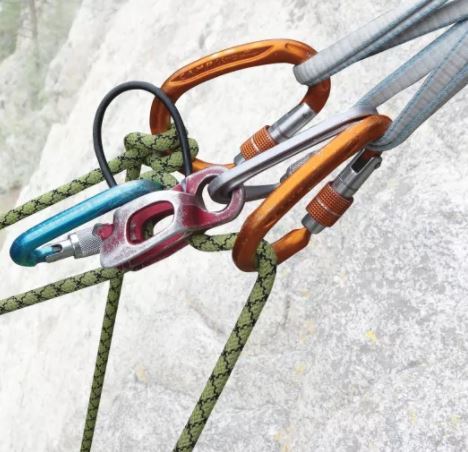 |
|
|
|
|
|
Kyle Tarry wrote: I hope I didn't say anything which implied that you don't have anything to offer--it's obvious that you do. If I didn't think you had anything to offer, I wouldn't have asked for evidence for your claims. Instead, I'd have assumed you didn't have any evidence and ignored you completely. There are a lot of experienced people who have said things that I've discovered to be incorrect. The untying to avoid flaking trick which you claim is "basic knowledge" that it's bad was taught to me by a guy who at least claims to have climbed for 20+ years, and who demonstrably climbs Gunks 5.10 despite not having climbed for a while. So I don't think it's unreasonable to look at the evidence I have, rather than simply believing people's claims simply because they claim to have experience (which they in fact may have). Additionally, even if I simply believed you based on your experience that I should never untie knots, understanding why that isn't the correct way to do things is more useful than even the fact that I shouldn't untie. Morgan Patterson gave me the evidence which you refused to give, and from that I gained a few things:
During World War 2, American forces in the south Pacific set up bases on many of the islands, coming in contact with the indigenous people who lived there. The Americans set up landing strips,and brought in their planes, carrying amounts of food and other supplies which to the indigenous people seemed to be a godlike wealth. Then the war ended, the troops returned home, and the planes stopped coming. The indigenous peoples of the south Pacific didn't understand how the air traffic system worked. So when the planes stopped coming, all over the south Pacific, indigenous people on disconnected islands began to do the same thing: they cleared runways and landing strips, signaled with air traffic batons, spoke into walkie-talkies that had been left behind--forming small religions around imitating what they had seen the Americans do, in the hope that it would summon planes with their cargo. Anthropologists call these religions "cargo cults". The cargo cultists weren't stupid--they merely had only ever learned what the Americans were doing, without understanding the why. A lot of climbing knowledge is communicated that way. People are taught to what to do to climb safely but not taught why. Then the experienced climber leaves and the cargo cult climber goes on doing what the experienced climber taught them. The situation changes, but the cargo cult climbers keep doing what they were doing, even though it no longer makes sense. Don't be the Americans in this story. Teach the indigenous people about the planes. |
|
|
good job drumming up 4 pages on a non-issue |


