|
|
20 kN
 ·
Sep 24, 2017
·
Unknown Hometown
· Joined Feb 2009
· Points: 1,346
·
Sep 24, 2017
·
Unknown Hometown
· Joined Feb 2009
· Points: 1,346
that guy named seb wrote:As far as I'm aware there are steels with better strength to weight ratios than 7000 series aluminium so why don't we use them? There are no steel alloys that have a higher strength-to-weight ratio than aluminum that are also affordable and can be machined or pressed easily into the shape of a carabiner. The strongest steel that is somewhat common would probably be something like tool steel, but it wouldent really be that great of a choice for carabiners for several reasons. There are other materials that are lighter and stronger than 7075 aluminum. Some titanium alloys have higher strength-to-weight ratios. There are other types of aluminum that when combined with treatments can have a higher strength-to-weight ratio than 7075. However, the ultimate problem is all of these alloys are very expensive. Aluminum alloy 7075 is a fairly common alloy that can be had for a reasonable cost and its properties are well suited for the manufacturing process required to shape carabiners. It doesent really make sense to use a highly exotic alloy to make carabiners if it only reduces the weight by a few grams and increases the cost of the product by 500%.
|
|
|
King Tut
·
Sep 24, 2017
·
Citrus Heights
· Joined Aug 2012
· Points: 430
1. Weight. 2. Cost (both material and manufacturing) if you use appropriate alloys. 3. Rust (if cheap alloys, SS is going to be too heavy/costly/hard to manufacture). 4. Anodizing (can you even anodize steel? I honestly don't know and have never seen it). If we take the OP's premise at face value then virtually every bit of metal gear in climbing should be steel. But almost none of it is. The OP should learn about why that is given that hundreds of trained engineers work on this problem daily and steel still has little utility in climbing other than wear properties on surfaces that see a lot of rope traffic (lowering rings) or small parts of largely aluminum equipment (ie nuts and axles in cams). Almost anything can be made of "superior" materials than what is currently used...but that doesn't remotely mean climbers need it or will pay for it. Aluminum + cost + weight + function is the sweet spot. The pressure on climbing gear is to mostly reduce cost and weight and increase function, but not necessarily in that order or in equal proportion.
|
|
|
BryanOC
·
Oct 4, 2017
·
All over
· Joined Jun 2015
· Points: 5
20 kN wrote:It doesent really make sense to use a highly exotic alloy to make carabiners if it only reduces the weight by a few grams and increases the cost of the product by 500%. Not in climbing'a current state, but perhaps in the future. In other sports, athletes/teams/companies are spending thousands, if not millions of dollars to save grams here and there. Which add up to kilos.
|
|
|
that guy named seb
·
Oct 4, 2017
·
Britland
· Joined Oct 2015
· Points: 236
I think I can put this thread to rest, I had my numbers all wrong for some reason even when i specifically googled for a certain type of aluminum it would give me a different one, I still don't understand how wire gates are a thing but there we go.
|
|
|
patto
·
Oct 4, 2017
·
Unknown Hometown
· Joined Jul 2012
· Points: 25
20 kN wrote:There are no steel alloys that have a higher strength-to-weight ratio than aluminum that are also affordable and can be machined or pressed easily into the shape of a carabiner. The strongest steel that is somewhat common would probably be something like tool steel, but it wouldent really be that great of a choice for carabiners for several reasons. There are other materials that are lighter and stronger than 7075 aluminum. Some titanium alloys have higher strength-to-weight ratios. There are other types of aluminum that when combined with treatments can have a higher strength-to-weight ratio than 7075. However, the ultimate problem is all of these alloys are very expensive. Aluminum alloy 7075 is a fairly common alloy that can be had for a reasonable cost and its properties are well suited for the manufacturing process required to shape carabiners. It doesent really make sense to use a highly exotic alloy to make carabiners if it only reduces the weight by a few grams and increases the cost of the product by 500%. END THREAD. Aluminum hits the strength to weight ratio quite well. And not to be forgotten is the bulk. Something that is half the "strength" but twice as heavy is still going to be weaker for a given weight for most load bearing purposes. It isn't just the material strength that matters but the SECTION strength. Aluminium hits the sweet spot for multiple reasons. Sure plenty of exotic materials would have better performance but the price would be eye watering. Aluminum and carbon fibre have dominated lightweight construction for a long time now for a very good reason. (Titaniumn and other expensive exotics are great but are too expensive most of the time.)
|
|
|
Marc801 C
·
Oct 4, 2017
·
Sandy, Utah
· Joined Feb 2014
· Points: 65
that guy named seb wrote:...I still don't understand how wire gates are a thing... Huh?
|
|
|
Ken Noyce
·
Oct 4, 2017
·
Layton, UT
· Joined Aug 2010
· Points: 2,695
Marc801 C wrote:Huh? Seriously, I thought the same thing.
|
|
|
BigB
·
Oct 4, 2017
·
Red Rock, NV
· Joined Feb 2015
· Points: 340
most of these questions re: metal strength to weight have been answered in high end bicycle production
|
|
|
todd k
·
Oct 4, 2017
·
Unknown Hometown
· Joined Mar 2013
· Points: 0
check out edelrid bulletproof biners. great idea. steel insert binders
|
|
|
that guy named seb
·
Oct 4, 2017
·
Britland
· Joined Oct 2015
· Points: 236
Marc801 C wrote:Huh? Wire gates have less mass than an aluminum gate yet are just as strong.
|
|
|
Marc801 C
·
Oct 4, 2017
·
Sandy, Utah
· Joined Feb 2014
· Points: 65
that guy named seb wrote:
Wire gates have less mass than an aluminum gate yet are just as strong. Yeah, we get that. It's this that you wrote that needs clarification: ...I still don't understand how wire gates are a thing...
|
|
|
that guy named seb
·
Oct 4, 2017
·
Britland
· Joined Oct 2015
· Points: 236
Marc801 C wrote:Yeah, we get that. It's this that you wrote that needs clarification: If aluminium has a better strength to weight ratio than any common steel alloy then why the hell are wire gates lighter but still as strong? That's what i don't get, if aluminium is as strong just bulkier then why is it that stainless steel wire gates are universally lighter weight hell even the petzl toothpick gates are lighter and they have a similar spring system.
|
|
|
King Tut
·
Oct 4, 2017
·
Citrus Heights
· Joined Aug 2012
· Points: 430
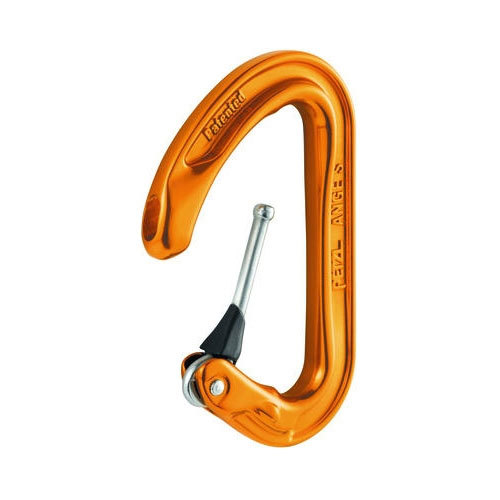
that guy named seb wrote:If aluminium has a better strength to weight ratio than any common steel alloy then why the hell are wire gates lighter but still as strong? That's what i don't get, if aluminium is as strong just bulkier then why is it that stainless steel wire gates are universally lighter weight hell even the petzl toothpick gates are lighter and they have a similar spring system. Because the steel can be made very thin for the gate, but can't be for the biner body or they will cut ropes. There is a certain cross section the rope bearing surfaces must have.
|
|
|
that guy named seb
·
Oct 4, 2017
·
Britland
· Joined Oct 2015
· Points: 236
King Tut wrote:Because the steel can be made very thin for the gate, but can't be for the biner body or they will cut ropes. There is a certain cross section the rope bearing surfaces must have. *cough*
|
|
|
Ryan Hamilton
·
Oct 4, 2017
·
Orem
· Joined Aug 2011
· Points: 5
that guy named seb wrote:If aluminium has a better strength to weight ratio than any common steel alloy then why the hell are wire gates lighter but still as strong? That's what i don't get, if aluminium is as strong just bulkier then why is it that stainless steel wire gates are universally lighter weight hell even the petzl toothpick gates are lighter and they have a similar spring system. Aluminum is lighter than steel for strength, but it takes more mass of Aluminium to be as strong as steel. A bulky wire gate of aluminum doesn't make sense, so they make it out of steel. Just to be clear even though it requires more aluminum to equal the strength of steel, the aluminum mass is still lighter. Hence the reason that everyone makes climbing carabiners out a aluminum and not steel. I'm pretty sure the extensive number of engineers would have figured that out a long time ago.
|
|
|
Ryan Hamilton
·
Oct 4, 2017
·
Orem
· Joined Aug 2011
· Points: 5
that guy named seb wrote:*cough* He's talking about the cross section of the carabiner, not the gate.
|
|
|
that guy named seb
·
Oct 4, 2017
·
Britland
· Joined Oct 2015
· Points: 236
Ryan Hamilton wrote:He's talking about the cross section of the carabiner, not the gate. I know though the idea that you need a certain radius for the rope or it will cut through is just plain false.
|
|
|
Charles Proctor
·
Oct 4, 2017
·
Somerville, MA
· Joined Apr 2016
· Points: 75
Note that the gate of be biner is only loaded only in tension, not in bending. This is why a narrow cross section structure (like a wire) works well for this part of the biner. The spine of the biner, on the other hand, is loaded both in tension and bending stress. That's why an I-beam structure is used for lightweight carabiners. It puts more material further from the neutral axis which makes the structure stiffer (and thereby stronger) for a given cross sectional area. Check out this wikipedia page if you want to learn more about bending stress. The spine of a caribiner is both in tension and bending. https://en.wikipedia.org/wiki/Bending
|
|
|
King Tut
·
Oct 4, 2017
·
Citrus Heights
· Joined Aug 2012
· Points: 430
that guy named seb wrote:*cough* The gate is not the same as the bend where the rope usually runs. That is the piece of the puzzle you are failing to grasp as well as those made by others above about cross section etc. that can be conveniently (cheaply) forged into aluminum as compared to steel. This makes for handling and strength to weight advantages for aluminum as compared to steel. A lighter steel carabiner would not have all of those surfaces that make modern aluminum biners handle so well and treat ropes well. And this conception you have that a thin wire will not cut a rope is simply false. I assure you that gate is right at the limit and is not a cross section that would treat ropes well over time. It can be made as thin as it is because it is very, very rarely to be expected to carry load across it. As well, you need to focus on what you don't understand about this topic, rather than what you think you know because, honestly, I haven't seen much actual knowledge of carabiner design in any of your posts. The very premise of this whole thread betrays your lack of knowledge. For the rest of us, its just an intellectual exercise.
|
|
|
Ryan Hamilton
·
Oct 4, 2017
·
Orem
· Joined Aug 2011
· Points: 5
that guy named seb wrote:I know though the idea that you need a certain radius for the rope or it will cut through is just plain false. Clearly we all know that it's not going to slice the rope, unless taken to the extreme, but the point is that a thin diameter steel carabiner is going to cause a lot more damage to a rope on repeated falls than a wider aluminum carabiner. Lest we forget, accidents have been caused from aluminum carabiners that have been so warn down that the surface was thin (and sharp?) and cut the rope when someone fell on it.
|

 Continue with onX Maps
 Sign in with Facebook