
 Continue with onX Maps
 Sign in with Facebook






using accessory cord for slings...


|
|
Brian L. wrote: But they usually are, and as a new climber you don't have the experience, or ability, to truly judge what is and isn't safe. Hire a certified guide to learn what the certifying body says is safe if you're really concerned about it. Trust AMGA, AAC, or any other body that put's extensive work into understanding these things. Like it or not, you're probably not smarter, or better able to understand the risks than they are. And they teach very conservatively. If you have a marginal placement then back it up with a 2nd placement right away, or asap, instead of hoping for some marginal gain from the type of sling you use. The rope is orders of magnitude more effective at absorbing energy than any other piece of the system. What you're suggesting is going back to a method that was used 50 years ago. There are reasons we've moved on from that. Arguably hammering in a piton is safer than placing a cam, but there's reasons we generally don't do that anymore either. But since you're paranoid: here is a post on supertopo discussing spring constant of different climbing materials. Based on the OP's tests nylon webbing has a lower spring constant (better) than 7mm nylon cord. /end discussion supertopo.com/climbers-foru… Thanks for the info. |

|
Eric, where do you see yourself on this curve?  |
|
|
Marc801 wrote:Eric, where do you see yourself on this curve? Haha! Very nice. I'd say I'm in the middle. It's interesting, that graph comports with the AAC accident data, insofar as the experience level is known.  |
|
|
Eric Moss wrote: Haha! Very nice. I'd say I'm in the middle. Precisely. |

|
Marc801 wrote: Precisely. en.wikipedia.org/wiki/Dunni… The skill under discussion is the ability to evaluate climbing safety systems. Well shit. I was planning to get stuff done at work today. 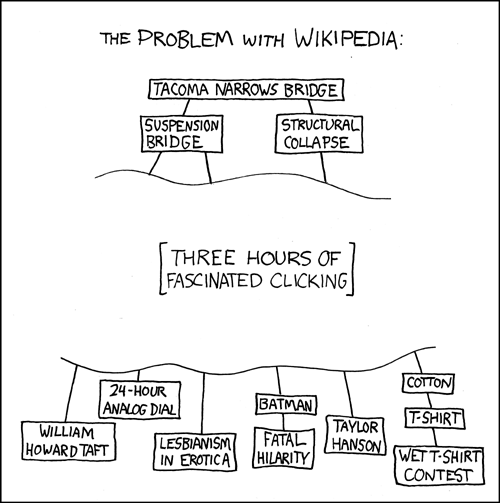 Credit XKCD |
|
|
JK- wrote: Well shit. I was planning to get stuff done at work today. Um, sorry! |
|
|
Marc801 wrote: Precisely. en.wikipedia.org/wiki/Dunni… The skill under discussion is the ability to evaluate climbing safety systems. Oh, I thought we were talking about climbing. What makes you think you're so good at evaluating climbing safety systems? |
|
|
Eric Moss wrote: Oh, I thought we were talking about climbing. What makes you think you're so good at evaluating climbing safety systems? Far more experience than you've been alive. |
|
|
Marc801 wrote: And it just struck me that talking to you is a lot like talking to Eliza. I had to look it up. |
|
|
Eric Moss wrote:What makes you think you're so good at evaluating climbing safety systems? That's a great question I think you yourself should answer. Your questioning the work of countless experts (not necessarily on MP) who state the traditional setups are safe. Not only that, you continuously propose UNTESTED solutions as being better. What qualifies you to say anchor system that have been proven in labs, and in many cases decades of real use are not good enough? |
|
|
Brian L. wrote: That's a great question I think you yourself should answer. Your questioning the work of countless experts (not necessarily on MP) who state the traditional setups are safe. Not only that, you continuously propose UNTESTED solutions as being better. What qualifies you to say anchor system that have been proven in labs, and in many cases decades of real use are not good enough? In that same vein, what problem are you trying to solve, and can you cite evidense the problem actually exists? This is a comment on all of your threads, not just your comments in this one. There's no problem I'm trying to solve. With imperfect solutions, there is always potential for improvement. |
|
|
But even when you have several people telling you that your suggestions are not improvements you insist that they are or at least might be, even ignoring the reasons they give you. And at times you have resorted to name calling when people have told you that your ideas are bad. |
|
|
So, you didn't answer the question: what qualifies you to be making the judgement you are? Since you're calling other's out, it's only right you provide your own qualifications. Eric Moss wrote: There's no problem I'm trying to solve. With imperfect solutions, there is always potential for improvement. What imperfection (aka: problem) are you trying to solve? Can you post evidence this is a realized problem? Eric Moss wrote:I don't think I've said traditional setups are unsafe, I don't think there are. You imply it by saying they aren't good enough for you. Eric Moss wrote:I don't think I've claimed untested solutions are better overall, only that they might be better in some aspects. Everything you've posted is claiming to be safer in some regard. |
|
|
Brady3 wrote:But even when you have several people telling you that your suggestions are not improvements you insist that they are or at least might be, even ignoring the reasons they give you. And at times you have resorted to name calling when people have told you that your ideas are bad. At the very least you should start looking at what you are suggesting more closely when someone says it is not an improvement. I do consider all feedback. I don't ignore suggestions, sometimes I just disagree on the subjective assessments that are made, which is the nature of subjectivism. |
|
|
Eric Moss wrote:...how about using Purcells as slings? dirtbaglawyer.wordpress.com… In your other thread where you posted this link, you asked about using them as a personal anchor. Which is it? The link only discusses the latter, not using them as slings. |
|
|
Eric Moss wrote: All that said, how about using Purcells as slings? Adjustable length and energy absorption, ya? dirtbaglawyer.wordpress.com… Will they work? Yes. Are they better? No. |
|
|
Also, if I only have marginal placements available then I prefer to put in two and connect them with a sliding-x (I'm talking mid pitch, not as an anchor), that is not an option with the purcell prussiks as slings (I know some will say this isn't necessary, but it doesn't require I carry more gear and does not take much more time than clipping them individually). Plus if you need to extend the piece to the full length of the purcell then you loose any benefit you would get from the purcell extending during the fall. |
|
|
All good points. Thanks for your patience. |


