|
|
NOFF
·
Oct 10, 2010
·
Big South Fork, TN
· Joined Jul 2009
· Points: 16
I love my tricams too, but I would like to add another note to this topic. Inspect your cams where the rolled pin goes through. I have two purple #2 tricams that both have fractured through the cam at the pins. One of them is fractured on both sides lined up in the direction of the webbing. The other has one fracture that shoots up through the blade. I have seen a lot of my biners fracture at the gate pins too. Please inspect all of your gear.
|
|
|
Goran Lynch
·
Oct 10, 2010
·
Alpine Meadows, CA
· Joined Jul 2008
· Points: 6
Darren, can you get a look at the head of the tricam? I'm wondering if the last roll of the pin could expose a sharp edge and therefore compromise the sling. With a bunch of sling rotation, if that edge was even a bit burred, the sling could be scuffed up pretty heartily from the inside...
|
|
|
Buff Johnson
·
Oct 10, 2010
·
Unknown Hometown
· Joined Dec 2005
· Points: 1,145
Price wrote:A thought I've had about tricams for a while is that an inexperienced second will 90% of the time have to resort to a nut-tool to clean them. If said inexperienced second isn't careful, he could easily damage the webbing around the pin while stabbing at the tricam to get it out. That combined with used gear theory + gunkiemike's thoughts on uneven loading could produce failure. You can't easily damage this nylon, especially with a nut tool; you'll get more wear with surface contact on the rock, than cleaning them with a nut tool. And the wear you'll see is on the backside of the tri-cam sling from the rock, not right at the pin.
Mine have gone through far worse than what is depicted here; and the areas surrounding the pin on mine are in good condition.
The nylon here is in good physical condition, except for the failure point, indicating to me it was either cut by a knife, which would certainly be noticeable to the climber, so I'm ruling that out; or, more likely, came in contact with something that can locally degrade a polymer, like an acid, which could account for the discoloring; granted it'd be nice to have better pics.
Run some chem testing on the material and see if anything comes out of it.
|
|
|
Darren B.
·
Oct 12, 2010
·
Asheville, NC
· Joined Aug 2009
· Points: 95
I've been out of the loop for a few days. I'll try to get a better picture of this for you. I really appreciate the input everyone's been providing. The cam is presumably still up on White Lightning at Table Rock in NC, right before you mantle up to the right leading crack (if anyone wants to go find it!).
More pics soon.
D.
|
|
|
PTR
·
Oct 12, 2010
·
NEPA
· Joined Aug 2009
· Points: 5
Time to get mine reslung. Has anyone used Mtn Tools for this?
|
|
|
Darren B.
·
Oct 23, 2010
·
Asheville, NC
· Joined Aug 2009
· Points: 95
Finally I've taken a few more pictures. Upon closer inspection, the inside of the webbing near where the cam once was is discolored black. I tried to get a picture of that. Also, one end of each side of the webbing had some longer threads left from the tear. You can see those in the pictures.
Does this help shed any more light on what might have happened?
Darren
|
|
|
Caleb Cerling
·
Oct 23, 2010
·
Boulder, CO
· Joined Mar 2010
· Points: 55
PTR wrote:Time to get mine reslung. Has anyone used Mtn Tools for this? I was thinking the same thing about getting my tricams reslung. I've never used Mtn. Tools but they are the company recommended by CAMP USA when I emailed them.
|
|
|
Julius Beres
·
Oct 23, 2010
·
Boulder, CO
· Joined Jun 2008
· Points: 396
I don't think I would trust a used tricam unless I knew the previous owner. Even the age of the tricam isn't that important. If the tricam was bootied and it spent a few months out in the sun, the webbing is very suspect. UV light drastically reduces the strength of the webbing rather quickly. I've been able to rip webbing with my bare hands that has been out in the sun for ~1 year...
I've thought of buying used tricams and then having them reslung, but the cost of that is almost the same as buying new ones, so it never really seemed to be worth it.
|
|
|
bearbreeder
·
Oct 23, 2010
·
Unknown Hometown
· Joined Mar 2009
· Points: 3,065
to the OP ... i still suspect nylon failure due to the elements
for the others .. camp does explicity show you how to sling tricams with webbing ... is you dont want yr old tricams send em to me ...
ill resling em and put em to good use as long as the metal parts are in good condition
;)
|
|
|
Jon H
·
Oct 23, 2010
·
PC, UT
· Joined Nov 2009
· Points: 118
Darren B. wrote:Finally I've taken a few more pictures. Upon closer inspection, the inside of the webbing near where the cam once was is discolored black. This is very interesting. Mark Nelson is right once again. Nylon webbing that's been exposed to acid turns black. I think there's a very high likelihood that your tricam was stored in someone's garage next to a leaky battery (or some similar scenario).
|
|
|
Gunkiemike
·
Oct 26, 2010
·
Unknown Hometown
· Joined Jul 2009
· Points: 3,732
Jon H wrote: This is very interesting. Mark Nelson is right once again. Nylon webbing that's been exposed to acid turns black. I think there's a very high likelihood that your tricam was stored in someone's garage next to a leaky battery (or some similar scenario). Can you substantiate this (bolded) sentence? I have put sulfuric acid on nylon bits a few times, looking for obvious visible changes. Never seen any. If the nylon turned black, then battery acid exposure wouldn't be the subtle, insidious danger that it seems to be.
Consider this photo. Two identical pieces of new white nylon webbing. The lower one has been soaked with 50% sulfuric acid (that's nearly double the concentration of battery acid) for 5 hours. At most there is a bit of yellowing. You wouldn't even notice it if the webbing weren't new.
|
|
|
Gunkiemike
·
Oct 26, 2010
·
Unknown Hometown
· Joined Jul 2009
· Points: 3,732
Darren B. wrote:Finally I've taken a few more pictures. Upon closer inspection, the inside of the webbing near where the cam once was is discolored black. I tried to get a picture of that. Also, one end of each side of the webbing had some longer threads left from the tear. Further support for the most likely explanation - that the webbing tore crosswise along the pin, starting at one side, due to off-axis loading. The long threads one one side are the last bit that ripped.
|
|
|
Bawls E. Climber
·
Oct 26, 2010
·
Unknown Hometown
· Joined Apr 2009
· Points: 35
Gunkiemike wrote: Further support for the most likely explanation - that the webbing tore crosswise along the pin, starting at one side, due to off-axis loading. The long threads one one side are the last bit that ripped. I would have to agree, I've seen almost the same thing on tricams I've owned sense new.
|
|
|
Aric Datesman
·
Oct 26, 2010
·
Unknown Hometown
· Joined Sep 2008
· Points: 145
Jon H wrote: This is very interesting. Mark Nelson is right once again. Nylon webbing that's been exposed to acid turns black. I think there's a very high likelihood that your tricam was stored in someone's garage next to a leaky battery (or some similar scenario). Um, think I'd disagree with this assessment. Ever notice your hands or the sheath of your rope take on a black-ish cast while belaying? It doesn't require storing it anywhere near battery acid; it's simply residue from the rope abrading the aluminum on the biner. And given the proximity of the tricam sling to the aluminum head of the tricam, it's quite possible that's what the black is from.
|
|
|
Buff Johnson
·
Oct 26, 2010
·
Unknown Hometown
· Joined Dec 2005
· Points: 1,145
I think where Jon was going and what that white nylon is lacking is Lead (IV) dioxide, PbO2; which is a dark-colored solid that comes from part of the PbSO4 & H20 equilibrium reaction of the lead-acid based battery. Or this could be something funky with discoloring the red dye of the nylon when it degrades.
It really isn't about right or wrong; this is just sharing some ideas.
Probably the only way to really move further is some chem testing; if only to rule out the possibility of the polymer having been subjected to some sort of local degradation, which nylon is certainly susceptible. I bet a college lab would be more than happy to do something.
It is obvious the pin of the tri-cam head came through the nylon, that was a given in the original post; it's more of finding out why that happened in a loading that wasn't all that substantial provided a typical climber and dynamic system.
Aric, I'd have to say the rope residue on the hands is from the water resistant coating applied to it.
|
|
|
Healyje
·
Oct 27, 2010
·
PDX
· Joined Jan 2006
· Points: 422
If it wasn't contaminated or a bad batch of webbing, then it looks like a case of old webbing and possibly a rough edge on the roll pin. Ugly regardless.
|
|
|
Aric Datesman
·
Oct 27, 2010
·
Unknown Hometown
· Joined Sep 2008
· Points: 145
FWIW I'd argue otherwise about the source of the blackness, Mark, on account it happens with accessory cord and uncoated ropes as well. I'm not actually looking to argue though; just blanking on the more appropriate word I wanted to use in its place.
|
|
|
PTZ
·
Oct 27, 2010
·
Chicago/Colorado
· Joined Jul 2010
· Points: 490
In my experience the Tricam is not a favorable piece. Only if you have 2 hands to place it and two hands to get it out of the crack. Fine for anchors but in my opinion, they don't do better than a Cam or BD stopper. If it takes me that long to place and I have to use both hands,obviously I am on such easy terrain that I should be running it out or soloing that pitch. I threw mine away years ago.
Trying to free them from their placements can take valuable time on a route. They can walk in the crack also, all pieces can walk.
If you are a beginner don't listen to your copy of "Freedom of the hills" and stay away from Tricams and Hexes.
I cringe at the crag when I hear those hexes making that clanking sound coming down the trail.
Hearing that sound means it is time to be somewhere else. Great for anchors but in lead situations where it matters - They are not my vote for gear to have.
|
|
|
Healyje
·
Oct 27, 2010
·
PDX
· Joined Jan 2006
· Points: 422
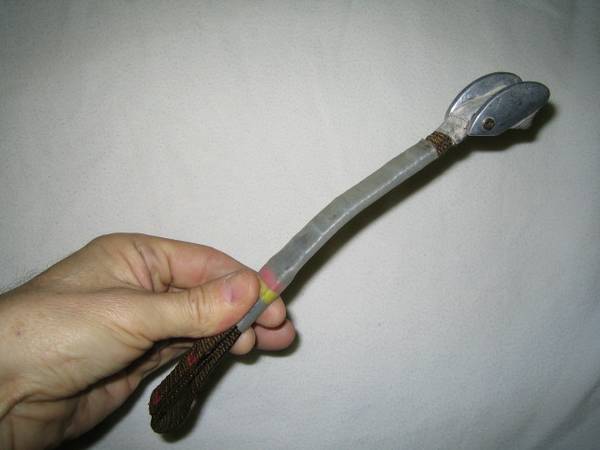
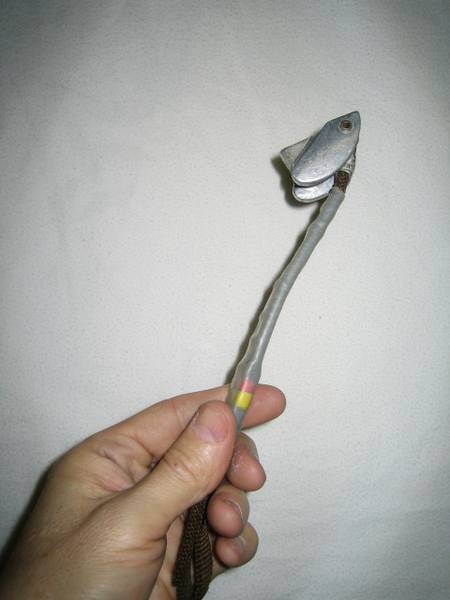
PTZ wrote:I cringe at the crag when I hear those hexes making that clanking sound coming down the trail. Hearing that sound means it is time to be somewhere else. Great for anchors but in lead situations where it matters - They are not my vote for gear to have. Huh? We did a number of early SoIll FAs stacking hexs in pockets and slots (one-handed) - it's a learning curve like anything else. Granted you don't get many granite or creek style splitters, but hexs can definitely work there fine with a little thought. As for tricams. I stopped carrying mine after moving to the NW and climbing basalt, but they work fine as well, particularly in places like the Gunks with lots of horizontals. Mine were modded however as seen below.
|
|
|
esha
·
Oct 27, 2010
·
Unknown Hometown
· Joined Sep 2010
· Points: 10
Hello everyone,
I have contacted Darren and will be retrieving the sling soon for chemical analysis. I will advise you all of my findings as soon as I have results.
Thanks
|

 Continue with onX Maps
 Sign in with Facebook