Continue with onX Maps
 Sign in with Facebook






Using an Equalette, where do you clove-hitch to?


|
|
I apologize if my comment came off as condescending, that wasn't my intention. |
|
|
Chris Blatchley wrote: two the two strands between the limiter knots. like a sliding x, flip one then clip both.A clove here? No, that’s wrong. |
|
|
Brian wrote: You tie a knot in it to make a master point.Well, that’s wrong too. If you don't know that you should probably get a mentor/guide/instruction before multi-pitch climbing.Ironic you get on a high horse and go down the “get a mentor road”. If you only have two anchor points you have no redundancy (single strand loop) with an Equalette so just use a cordelette Wrong again. Are you a mentor? |
|
|
That stow bag is adorable |


|
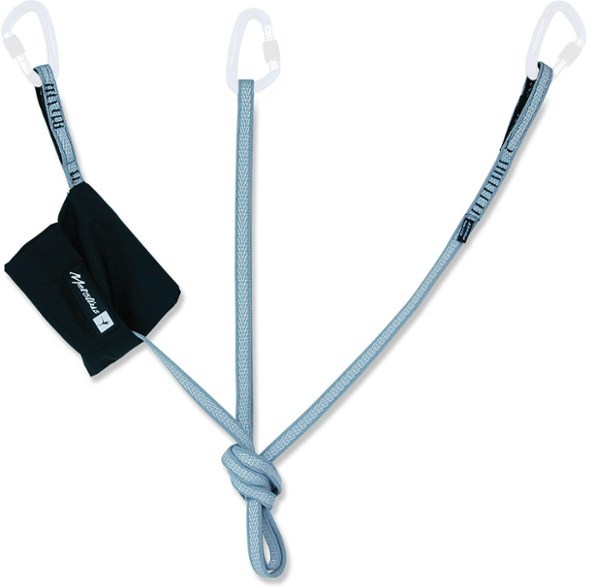
Just to stop confusing people here, this is a web-o-lette. This specific webolette is called “the equalizer”. This is not an equalette. |
|
|
Whatever happened to the Alpine Cock Ring? I still have one at home that I never use...oh yeah, here it is: ACR |
|
|
Funny how the main question hasn't been yet answered.. |
|
|
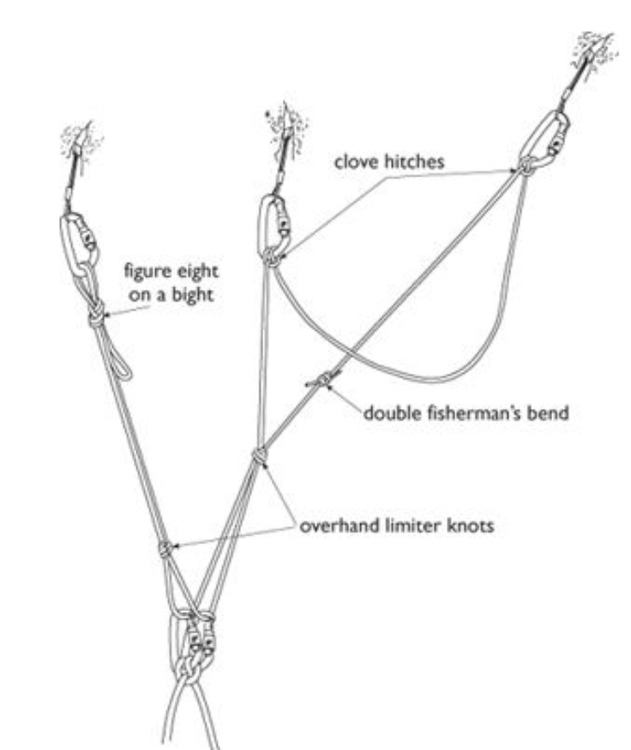
OP is asking where the belayer goes in direct with the clove. This illustration shows the belayer's clove on one strand of the equalette. The other strand of the equalette is used for the guide belay. |
|
|
Greg D wrote: Well, that’s wrong too. Ironic you get on a high horse and go down the “get a mentor road”. Wow, did someone not have his coffee this morning? If the knot in the illustration is wrong then tell Metolious. It is their illustration not mine. I did think that the OP meant a webolette/equalizer. I will self-flagellate for my mistake. And yes I think a lot (majority) of people asking questions on here should get hands-on instruction instead of asking how to do it on the interweb. |
|
|
Niccolo Gallio wrote: Funny how the main question hasn't been yet answered.. Bill Lawry’s diagram shows it. |
|
|
Greg D wrote: Ok, sorry I missed that part of the illustration. So just to make it clearer in my mind: |
|
|
Niccolo Gallio wrote: Yes, so there are other options you can consider. I sometimes use the slack span on the right of Bill's image to tie an overhand on a bight which can be used to go direct while the guide belay is on a magic x at the equalette. Or you can swap, so the belayer can go in the magic x and the guide belay can go in the overhand knot. It depends on the situation on which you choose, but IMHO, people often build anchors to belay the second up, but should be building for the lead belay. The second climber normally produces relatively small loads in the vertical plane versus the lead situations where factor 2 falls, change in pull direction, etc. will produce much more impact. With this being said, my preference is to clove into the magic x and direct belay in the overhand knot. |
|
|
Niccolo Gallio wrote: When using an equalette to build an anchor where do you attach your clove-hitch carabiner? (I mean: "you got to the ledge that you like, you place three (or more) pieces, you build an equalette anchor and then you decide it is time to secure yourself so that you can ask to be taken off belay, where do you clip yourself?") Personally, I suspect all the non-direct answers and misunderstandings reflect how few people have decided the advertised equalette is their standard rig. If very few are using it, that would say quite a lot considering that the equalette was introduced over a dozen years ago. Edit to add: The book does not show and I have never considered how to belay off the anchor with the equalette; Chris Cragsocks gives some good ideas. And, as you just noted, many would caution against attaching the belay (or yourself) to just one strand as there would be no redundancy. Still, if you are seeking the "text book" description of how to attach yourself to the equalette, it is given in Long's first (and only?) publication about the equalette: Climbing Anchors, Second Edition, John Long & Bob Gaines, 2006. Repeating some of what has been said and referring to the book ... Long/Gaines advocated always using two lockers. And each locker is individually clipped to one of the two strands between the limiter knots. Note: If you are "forced to use one" locker, the book does acknowledge one can convert the two strands to a sliding X and clip that. Still, it seems clear that the intent was to use two lockers - probably to avoid the "clutch effect" of the sliding X. And in the five pictures I found of the equalette in the two-locker config, each shows using the rope to attach yourself. And the knot used to attach yourself is a figure 8 on a bight clipped to both lockers, not a clove hitch. Note: Clearly, if you are "forced to use one" locker, then you could just clove the rope to that locker. |
|
|
Chris Blatchley wrote: two the two strands between the limiter knots. like a sliding x, flip one then clip both. Where does John Long say that? He makes a strong case for it in his anchors book. |
|
|
brad larson wrote: After the book was published, there were many discussions in climbing communities about the equalette ... including an epic thread on the old RockClimbing site. John long and many other knowledgeable parties participated. From my faulty memory ...
|
|
|
I bought one of those equaletts. The first thing after tying it off I thought? Where do I clip with some redundancy? Because of the single strand it seemed pointless for redundancy. Must have loops to the protection for that . But really just have two lockers into the anchor point and use one of them for yourself. |
|
|
Thanks for the summary, Bill. It's unfortunate that the current edition of Long's book still advocates for the equalette over the cordelette. I imagine most new trad climbers don't read thru every old forum thread. Seems that if Long and the climbing community have mostly agreed that the equalette isn't up to snuff, he should update the book. Or publish an addendum, an article, or something. |
|
|
brad larson wrote: Thanks for the summary, Bill. It's unfortunate that the current edition of Long's book still advocates for the equalette over the cordelette. I imagine most new trad climbers don't read thru every old forum thread. Seems that if Long and the climbing community have mostly agreed that the equalette isn't up to snuff, he should update the book. Or publish an addendum, an article, or something. Isn’t cordelette just a little cord? |
|
|
Almost all the time you should have 2 or 3 solid pieces, and then it’s personal preference what to use. ie they all work fine. Use what you are comfortable with. |
|
|
brad larson wrote: Thanks for the summary, Bill. It's unfortunate that the current edition of Long's book still advocates for the equalette over the cordelette. I imagine most new trad climbers don't read thru every old forum thread. Seems that if Long and the climbing community have mostly agreed that the equalette isn't up to snuff, he should update the book. Or publish an addendum, an article, or something. To John Long’s credit, that anchor book provided some of the best photos I’d seen at the time of strong individual placements: primary. And I tried the equalette for about a year. Heh, and I’d climb with someone who preferred to use the equalette. :) |