
 Continue with onX Maps
 Sign in with Facebook






A less bulky anchor: Replacing a cordelette setup with a 240cm Dynex runner - what am I missing?


|
|
^^^ |
|
|
|
|
|
Here, Frank. |
|
|
Harumpfster Boondoggle wrote: Here, Frank. Not taking quizzes, Teacher. School's Out for Summer. |


|
Bearbreeder and Boondoggle walk into a bar... |
|
|
...one says, "I know more than anyone here." The other one says... |
|
|
To add to this mess. I'm with Tut. The vast majority of the time, I will utilize two points of attachment to any anchor. It's usually via a Tether upon arrival and then the rope cloved somewhere else (or vice versa). This will, of course, be situationally dependent - steeper or more exposed belays increase the 2x method chances. A large ledge/stance, where I may have to extend off the anchor a ways, or a secure position where detachment from an anchor, however unlikely, would not be catastrophic will increase my use of only 1 point of attachment. This habit was instilled in me by Hans Florine back in my formative years learning to climb. (I worked with his wife at a gym for a period of time and was lucky enough to learn a few things from both). The basic gist he gave me was, shit can happen at an anchor, particularly busy ones while moving fast, so the 5 seconds extra it takes to toss a second point in is well worth it. I go a step further and have a distinct locker on my PAS that is unlike any other biner on my rack just to keep things even more crystal clear. There are many single things in climbing that are "good enough" where backups are either impractical or simply not needed. However, if the time penalty is minimal, a bit of extra vigilance is not unwarranted. (This is yet another reason I'm a huge proponent of a tether vs "just use the rope".) Is a single clove hitch to your anchor acceptable? Sure. I do it now and then. My years have taught me to wary of "acceptable" when it comes to certain things. |
|
|
Its french ... "C'est la vie" |
|
|
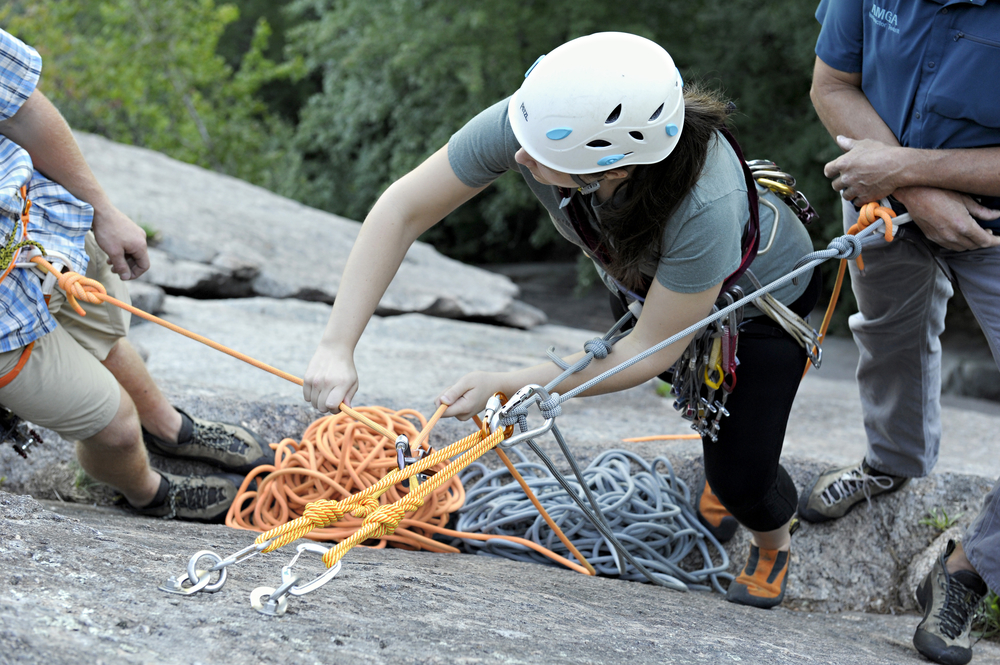 This image (cited above as an example of single cloves) is a classic case of why I'd opt for 2 points. Here you have a party of 3 on an exposed ledge. The two on the right are both attached with the same rope (color) via adjacent cloves and nothing else. There's just a wee bit too much chance something could be mistakenly modified there (esp if this is an instructional class or with inexperienced parties - highly likely given the nature of the person's site). I'd just have thrown a second clove with the orange rope and a bit of slack to keep it out of the way onto one of the bolts. (Tether even better) Done. Into the 2nd bolt independent of the master point will also let you move faster when off belay is called since you can break down most of the anchor while still attached. |
|
|
Mattm - that pic also shows well why the quad is so loved (and argued for, it seems) by guides. It lets them bring a client up while the other client just hangs out. If the climber at left had fallen before reaching the ledge, the quad minimizes the yank that the climber at right would feel. Had they both been attached to a single masterpoint, the fall would jerk the other client around significantly. Novices being what they are, the typical result would be an unselttled/frightened client - not what the guide wants. When folks rail against the quad as unnecessary, just remember - it's the guiding community that's responsible for (my estimate) 90% of the advocacy for it. |
|
|
Gunkiemike wrote: Mattm - that pic also shows well why the quad is so loved (and argued for, it seems) by guides. It lets them bring a client up while the other client just hangs out. If the climber at left had fallen before reaching the ledge, the quad minimizes the yank that the climber at right would feel. Had they both been attached to a single masterpoint, the fall would jerk the other client around significantly. Novices being what they are, the typical result would be an unselttled/frightened client - not what the guide wants. When folks rail against the quad as unnecessary, just remember - it's the guiding community that's responsible for (my estimate) 90% of the advocacy for it. Right on. Your post explains, without being condescending, that many options you hear of for anchors boil down to guiding standards that guides HAVE to follow. Climbing for this average Joe is not guiding, every anchor deserves a different approach. Some will be a couple of slings/draws with no lockers in sight, some will be an overbuilt truck stop. Being safe is great and all but if you really want full on safety people ought to take up watching football and Nascar on TV. Keep those PAS stories coming. |
|
|
Gunkiemike wrote: Mattm - that pic also shows well why the quad is so loved (and argued for, it seems) by guides. It lets them bring a client up while the other client just hangs out. If the climber at left had fallen before reaching the ledge, the quad minimizes the yank that the climber at right would feel. Had they both been attached to a single masterpoint, the fall would jerk the other client around significantly. Novices being what they are, the typical result would be an unselttled/frightened client - not what the guide wants. When folks rail against the quad as unnecessary, just remember - it's the guiding community that's responsible for (my estimate) 90% of the advocacy for it. There would still be jerking of the master point as the rig “slides”. A better setup would be the belay sling i advocate. A direct belay off the left bolt backed up to the right would eliminate nearly any jerk. I am not a guide so won’t presume to comment on their preference for the Quad (I have my thoughts) but I fall in the “not a fan of the quad” camp. Never mind a discussion on the extension hazards the way that one is tied. Yes, there are two bomber bolts so moot here but not if it remains pre rigged and is used elsewhere. ACMG video on Fixed point using belay sling |
|
|
Kyle Tarry wrote: Try to not let people hurt your feelings so bad on the internet. Even queen Tut can take some bashing and not go on and on about it. ;) |
|
|
Kyle Tarry wrote: I Keep looking for such statements in this thread? Can't find them? |
|
|
In theory, the cordalette is slightly dynamic, so your anchor would hold up slightly better. But if that ever comes anywhere close to being in play, than you built a shitty anchor. |
|
|
John Pan wrote: In theory, the cordalette is slightly dynamic, so your anchor would hold up slightly better. But if that ever comes anywhere close to being in play, than you built a shitty anchor. John Pan sighting! |


