
 Continue with onX Maps
 Sign in with Facebook






New TRS device


|
I'm not sure the "failure mode" in that YouTube short is really a failure. It's more of a natural feature of this style of device--it's not an ascender or locking pulley that only goes one way on the rope. The Taz LOV will slide down the rope in the same way if you keep it oriented vertically. They depend on rotating a bit to initiate the grab, but that happens when you fall unless you somehow hold the device between your legs or something. I think this is just an inherent risk in using a device like this that allows easy lowering. If you're super concerned, dual MTs only go one way on the rope... I guess if you held it really high the 'biner could pull more straight down somehow, but I still think that in virtually every fall there would be some outward angle which would cause it to lock. The soft shackle might reduce this risk. 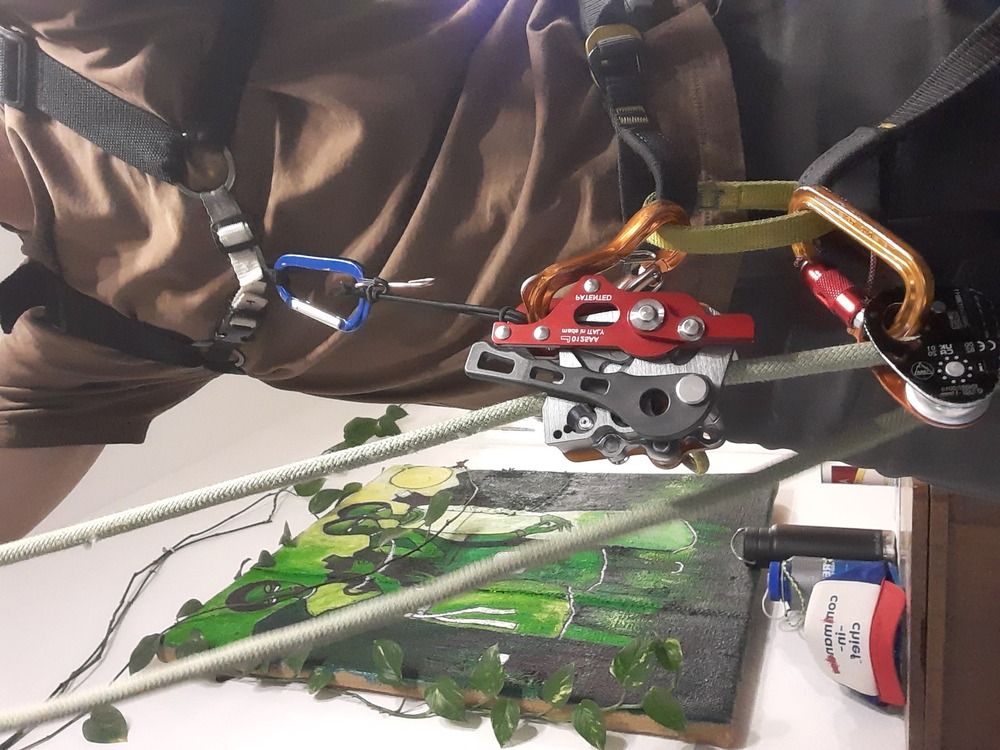 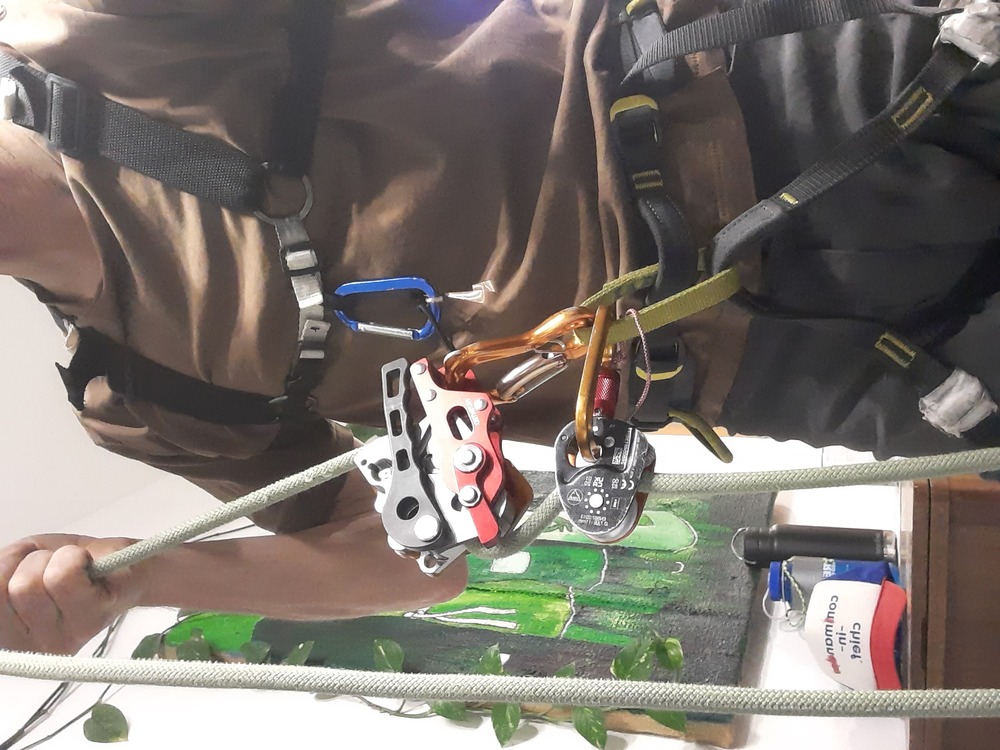  For reference, the LOV sits a bit higher. It doesn't catch as readily on this 9.4 as the Sulu does, though. I use fatter ropes with it if I'm just TRS-ing and falling a lot (the 9.4 is for LRS and when I'm secondng pitches).  |
|
|
Cherokee Nuneswrote: Apologies if I'm being dense, but when you say significant limitation to TRS, are you referring to how the Sulu cannot be higher than the belay loop for it to function correctly? And then of course the still unknown of what it'll be like to trail a PCD even lower than the Sulu so you're backed up. Mine hasn't shipped yet so I'm still thinking of how to work around that stuff also. |
|
|
Call them concerns:
I'll sort it. I just don't like finding this out after I ordered it. In fact it bugs the shit out of me. |
|
|
Cherokee Nuneswrote: Cherokee. You can use two devices on one rope. You must mount the sulu higher up (around the sternum) and allow the device and carabiner to hang freely. PCD below on belay loop  |
|
|
What does that picture have to do with what you wrote? I don't get it. |
|
|
Cherokee Nuneswrote: Imagine the sulu is the top device and a mictrotrax is the bottom device |
|
|
Cherokee Nunes wrote: Why would the mini bang into your knees? |
|
|
OK so I deleted the post you quoted so I could respond, stand by... Red arrow denotes sulu go position, red circle to suggest where 2nd device would be, best case (closest). As I understand it, the Go needs a little rope travel before it grabs, so the 2nd device will need to be extended long (low) enough to allow the Go to work, yes? Here is incorrect position, with the Go resting on the thigh, no bueno.  Here is correct position, note red circle. Also, didn't they say the body of the Go should not be allowed to be above the belay loop? And yet in vid the climber choikes the device up above the loop a couple of times, like he did here. Isn't this also out of position? They were super cautionary about it. 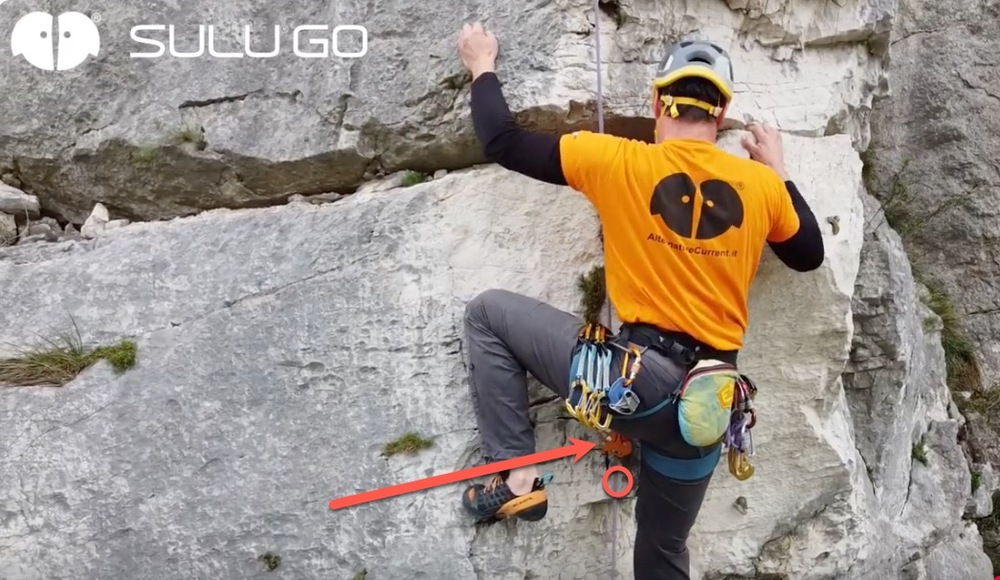 And this one isn't labeled as out of position, but its not labeled as in position, either.  So yeah, that's my concern. I'm sure it will all be great, once I can field test it. |
|
|
Noel Z wrote: Good point. The SS, with its tubular webbing abrasion cover, can go in there but it's hard to make it happen. When the LOV gets pulled, however, it would yank it out of that gap. I haven't used this setup much, and this provides an argument for perhaps putting a Ring Open on the LOV and SS to that. Previously I had a swivel on the LOV and SS between it and the harness. In any case, after playing with it a bunch more, I'm not very happy about the LOV's (lack of) grabbiness on that 9.4 rope in TRS mode. It grabs really well on the ones I usually use for TRS, but I was using it a bunch for LRS with the 9.4 and then seconding the pitches, which is obviously TRS. ETA: I did some more TRS practice with the soft shackle on the LOV and have decided that I don't like it. It doesn't stay in between the plates, but it does catch on the edge of the notch when falling, which isn't very confidence inspiring. I put a Ring Open on the LOV and it's now totally fine. |
|
|
Today I used the device as a belay device first the first time. While at first glance it may initially seem unintuetive, I actually think this is by far the most natural belay device out there with pretty much no learning curve, no special techniques, no special grip. All you need to do is gently pinch the device and pull rope out as fast as you want, it takes the slightest bit of attention to realise that if you pull straight out it's fine but anything off angle and you'll have a problem. For belaying, I strongly believe this is the best device on the market. |
|
|
that guy named sebwrote: I also just used this in a multipitch. It was a joy and I mostly agree with you. Caught a whip, no hand on the brake strand as designed. Partner said was a good catch. Top down belays is great. Rappelling is meh, but I always have my ct alpine up on me for that. |
|
|
I have used this device for belaying 10ish pitches, TRS'd 30+ pitches over the past couple days, and LRS 10ish pitches yesterday. I'm going to just touch on belaying and TRS here. |
|
|
Thanks Mr. Rogers, very encouraging! I've stuck with my minis because I can't reliablly work the micro with my sausage fingers! I've tried and tried I'm just too fookin clumsy, |
|
|
Noel Z wrote: Most people love the changes… |
|
|
I used mine a bunch today for lead & TR belaying. On the drive over I was telling my GF that I didn't think it would be worth carrying this thing over a Grigri for longer approaches, but I'll have to eat my words. It's pretty fantastic and worth the extra weight. Giving slack is so much easier than a GG. it's more reminiscent of belaying with an ATC. Lock is instant and super confidence inspiring, and lowering is smoother than a GG as well. I have never lowered anyone else with the LOV, but i belive the Sulu is smoother. Another advantage over a GG is that you don't need to remove the device fom your belay loop, so you can't really drop it. For LRS and TRS on multipitch routes this is important to me. These things are going to sell like hotcakes. |
|
|
Alternative way to belay with the SULUThere are multiple ways to belay with the Sulu. All of them feed well, but not all methods will be intuitive to those who have used other devices. I came up with a way that works for me and seems more intuitive to way that I normally belay. It is mounted backwards (with red leg facing out). This is one of those things where a photo is worth a thousand words (see the two photos at the end. To use it this way, it helps to use a long ‘biner. I use a DMM Ceros.The advantages FOR ME are: 1) it allows me to pull out slack directly towards climber 2) the Sulu is is still held correctly (horizontally) so it is free to pivot and lock-up. (You can also slide hand slightly back and have two fingers wrapped around the free rope if you feel insecure of belaying without having a brake hand on rope). 3) the rope feeds great 4) allows me to lower leader by pulling handle back towards me instead of away or to the side.5) works for both lead and TR 6) it could be more intuitive for lefties. The main drawback is the front of my hand right against the ‘biner YMMV  |
|
|
I made a game changing upgrade to the device today...  |
|
|
 “This is a review of its use as a lead belay and guide belay device — posted here because presumably those interested in the device for TRS will want to know if it’s good for other uses. Usage: 15 pitches of lead-swapping in Yosemite. General observations: - heavier than most common sport ABDs, but not so heavy that i would rule it out for non-alpine climbing - in terms of volume, it’s big. No getting around that. I hope AC makes a mini version - more moving bits than some of the more common devices, but theyre pretty robust looking and easily reached for cleaning - swivel cheek/straight channel is an incredible innovation in the sport ABD realm Lead belaying: 10/10 - not much to say here. Everything I hoped this device wouldd do, it does. The things i was concerned might ruin the experience turned out to be non issues. - the no-brake-hand works well. You can yard slack through this like no other device, and you never have to defeat the cam to do so. I caught a 10ish foot whip of my leader who was completely out of sight. Totally unexpected. No hand on the brake strand. Partner said catch was good - my big fear with this device was getting jammed up when short roping. However, if you short rope, you don’t have to do an awkward dance to get things moving again (looking at you, vergo). Just yank the rope along the axis of the sled and it easily frees up. This pleasantly surprised me Guide belaying: 10/10 - just as good as the vergo, but the orientation seems to work out better most of the time (no handle dragging against the rock as oftenn happens with the vergo Rappelling: 3/10? -I need to play around with this more. Extending the device helped some, but mostly I use my alpine up anyway. Anyone got tricks?” |
|
|
Mr Rogerswrote: I’m doing this immediately. Maybe a little toupee would be in order |
|
|
Mr Rogerswrote: To confirm, You are running something similar to Evans picture but with the Sulu Go at the top tied onto the torse and the harness belay loop for your backup? Any chance you could post a picture of the specific setup you have been using and having luck with?  |


