
 Continue with onX Maps
 Sign in with Facebook






The latest, greatest 2:1 hauling kit


|
Christopher Chuwrote: I was just perusing through this thread, got to the TK incident, etc - Chris's point here is something that definitely is worth looking into. The reason i say this is that i just finished a 7 month investigation regarding a couple hundred 3/8" cables (with breaking strengths of approximately 13,000 pounds) that were systemic failing (ie rupturing) under 3000 pound loads. Basically a 3000 pound weight that suspends from one of these cables, and is free to rotate. "Free to rotate" is a very key phrase here... Long story short, the spec called for a 1/2", 20,000 pound cable and the contractor said that was ridiculous and installed the 3/8" cable. Basically, like Chris pointed out the cables are made up of a bunch of wires/strands that are twisted. when you put a tension load on the cable, each of them want to un-twist. cable manufacturers have a gazillion different stranding configurations for a bunch of different purposes. Some have higher strength, but you don't want to use them in a situation where they aren't braced against rotation. Others are wound in opposing directions within the layers to try to balance out the net torque, but this typically comes at a cost of less strength. In any case, whenever you have a suspended load that can rotate you need a lot more strength. So, why is this? When the load is applied it will try to rotate the cable in the direction of net torque about the axis of the cable. Typically this will be in the opposite direction of the lay of the outer stranding. When this happens, the outer strands become more slack and will shed load to the inner strands (which are tightening). Usually the cable fails from the inside out and you never see it coming. ASME B30 (standard for rigging, winching, etc) requires a factor of safety of 5 for ROTATION RESISTANT cables, which are used for this purpose. A 7x19 cable isn't even a rotation resistant cable, so I am not sure how you would really look at it for this scenario (ie what you would use for an FOS for this cable). I'm definitely not surprised the 1/8" cable broke, and to be honest with you i wouldn't be surprised if the 3/16" cable broke at some point. I really don't know though. Steel cables really don't like to be used in this manner (ie suspended load, free to rotate). And they really don't like to be used in this situation when you are loading and unloading the cable a bunch of times. Usually designers try their best to avoid this situation. This kind of leads me back to the very beginning of the thread where I was trying to figure out why a cable is being used here? This brings up a question about permadraws. I am curious how the test them for strength. Are they tested in some sort of jig that prevents them from rotating, and isn't really accurate/realistic? (This is what happened with the cables i investigated, they tested them in a jig and the cables weren't free to rotate, so they likely overestimated the strength of the cable for the actual application). I can't find anywhere that states the size of the cable, but it looks like 3/16" or maybe 1/4". I am definitely a bit stumped on this one, because you don't hear about permadraws breaking. |

|
I’d imagine permadraws experience the same issues, but an individual permadraw may not see nearly the same amount of cyclic loading as a haul. Consider a 2:1 haul of 100 feet consists of 200 cycles. Multiply that by lets say 30 pitches per big wall and 10 walls to failure, so I am guessing 60,000 cycles to failure. How many permadraws see 200 cycles let alone 60,000. Gym draws see more falls, but I’d imagine gyms swap out their draws every year, maybe 2 years, and they still won’t see nearly enough. Assuming 10 falls per day for a year is 3650 cycles per year. It’s not often you’ll find cyclic load testing as it is time consuming and energy hogging, thus expensive. Not sure that anyone in the climbing industry would do this. It’s easier and cheaper to just say replace your gear after so much time has gone by. Someone should take that Ikea robot that tests their lounging chair and give it new purpose. I’m glad to see that the latest setup pictures show people moving to soft goods or direct connections. |
|
|
Cool stuff. Few years ago I made a cyclic loading system that works with a $600 electric winch line. We did millions of load cycles on various offshore anchors (subject to wave/tidal loading) but in a test trench. It could go over 1,000 lbs easy. I still have most of the parts and the control software. I'm supposed to be getting a degree but do love a good side hustle if anyone's interested in collaborating! |
|
|
This is really interesting. As I understand it, the cable is strong because the wires are twisted together. Subtly and constantly forcing them to untwist causes them to eventually fail. (?) Certainly, in the hundreds of hauls I’ve done, I’ve seen the cable twist back and forth a bit, never a 1/4 of a turn (or maybe rarely), maybe an 1/8 more often. Very, very often, it seems, everything lines up prerfectly and it doesn’t twist at all. (I’m one of those guys who has to have everything set up neat and clean and smooth. It’s just not in my nature to let it be if I see it twisting back and forth radically.) |
|
|
Mark Hudonwrote: That is correct, in theory. From fatigue testing for cable wires, what we do know is that free-ended cables placed under tension will lose strength over time and eventually fail. What we don't know is how much load, how many cycles, or how rotational loading can affect the lifespan. Frankly, the wire draw is being used in an application for which it was not designed, and there is not enough information to say that it is safe to use. I will email Sterling as they sell wire draws, so I'm curious if they have any certifications like CE EN 566. |
|
|
I suspect a loop of wire, a circle, would not suffer the same problem since the ends of the wired would be fixed. |
|
|
Mark Hudonwrote: I believe a loop would still suffer from the same conditions given that the load is free to rotate. A fixed-end would be something like a draw bridge where the bridge deck and the tower are connected by a cable. The deck and tower do not have any free rotation around the direction of load since they are connected together at a joint. For reference, the UIAA CE standards are listed here: https://www.technicaloutdoorsolutions.co.uk/2012/10/en-numbers-simplified/ I see that the CAMP permadraw has a CE EN 566 stamp, but I'm skeptical since this certification is for fabric, not steel. Going to email CAMP as well. |
|
|
A loop cable should be less prone to issues related to unwinding. basically the two parallel cables have torques in the opposite directions, and the loops at the end kind of fix them in place and prevent rotation. (That was one of the things I think would be an improvement with the haul cable). The single cable question was really bugging me this weekend. Perma-draws look like they use a single cable. Cams typically use a single cable. Most stoppers use a loop, but some (wild country ultralight, maybe others) use a single cable. Yet, we don't see these blowing out all the time. I think with these items the load doesn't tend to "actively" try to twist the cable, and there is a pretty large factor of safety for the cable size. For example, when you take or fall on a cam you don't tend to spin around out of control, you pretty much stay lined up with it. I am curious if hauling tends to actively twist the cable more due to the bag wanting to spin, etc. Not really sure. Here are a few fun photos of phuct cables that i looked at this summer: 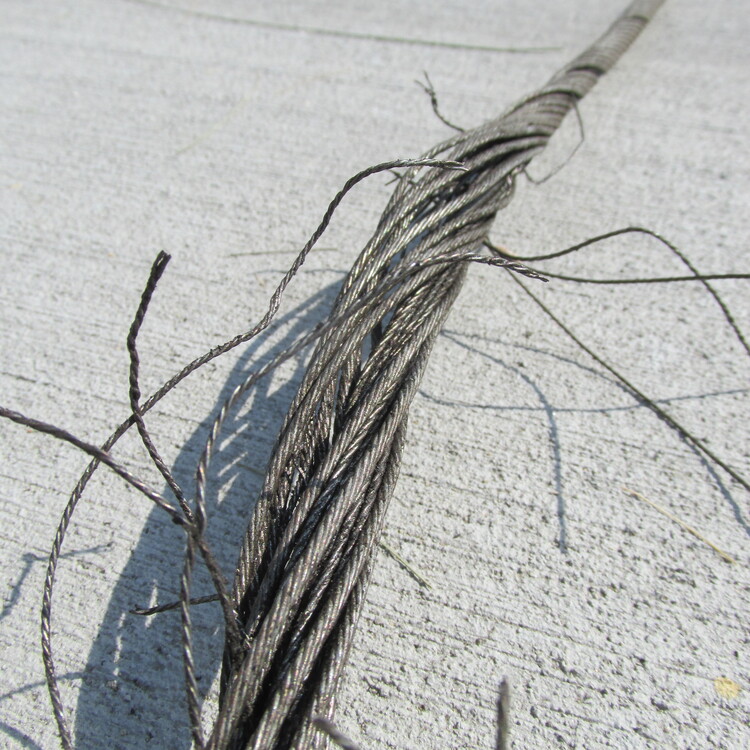 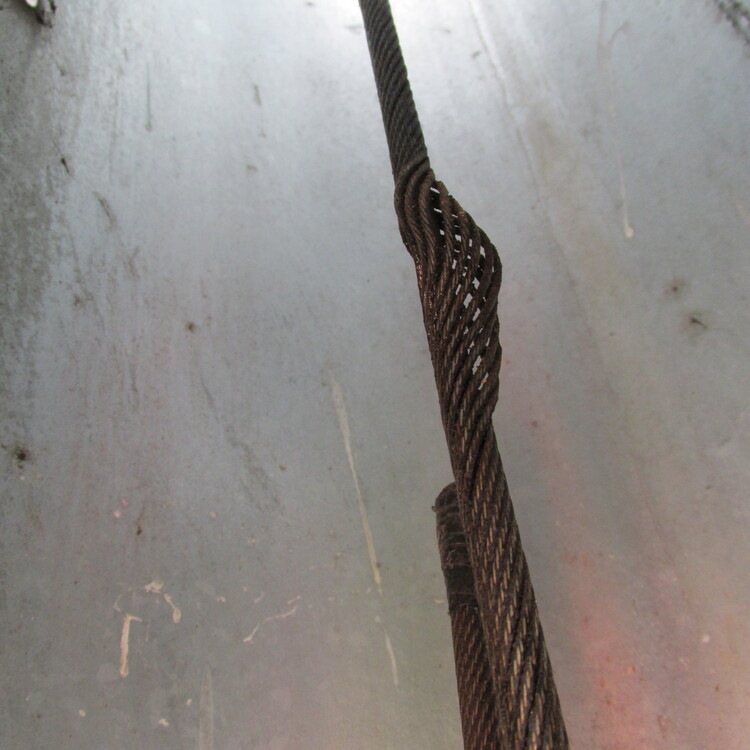 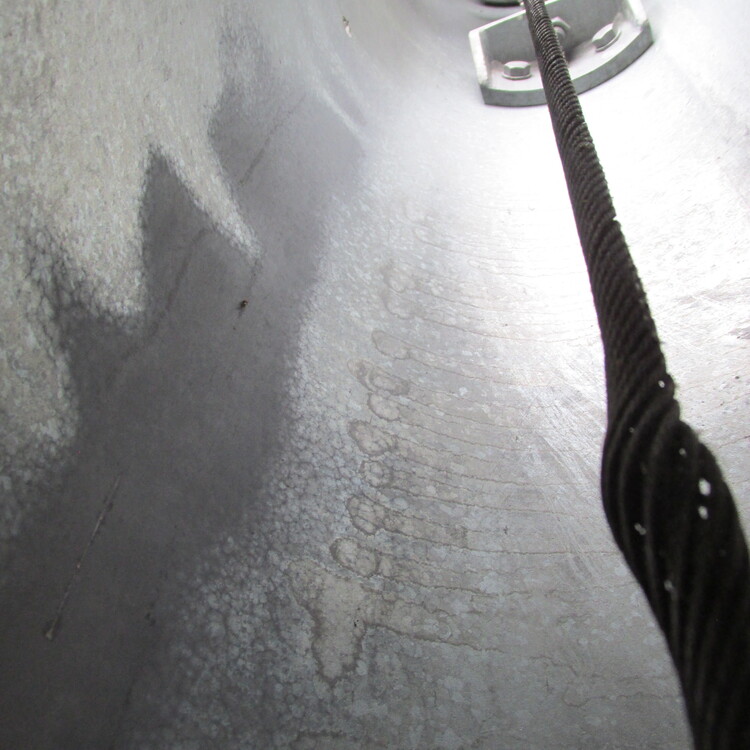 |
|
|
Does anyone use a Rock Exotica Omni Block 1.5” Swivel/Pulley? I’m looking at picking one up but was curious if the larger diameter will have much of an impact on making hauling easier vs the 1.1” model. Thanks. |
|
|
https://www.bsar.org.au/wp-content/uploads/2018/01/PulleyReport.pdf
If its still feeling like too much work, you might want to consider a 3:1. Protrax and 2x 91% pulleys. 250/3 /.95 /.91 /.91 = 106 lbf. |
|
|
I can’t imagine that you’d feel any difference. I’m into a fair level of big wall camping but 3:1 is soul crushingly slow and really, you shouldn’t be taking that much stuff if you need 3:1. |
|
|
Brian Rwrote: I’ve used both. And I can tell you the 1.5 is substantially larger and heavier. For me, the compactness and weight savings of the 1.1 out weigh the fractional gain in efficiency with the 1.5. |
|
|
Brian Rwrote: If you're gonna go big, go huge! 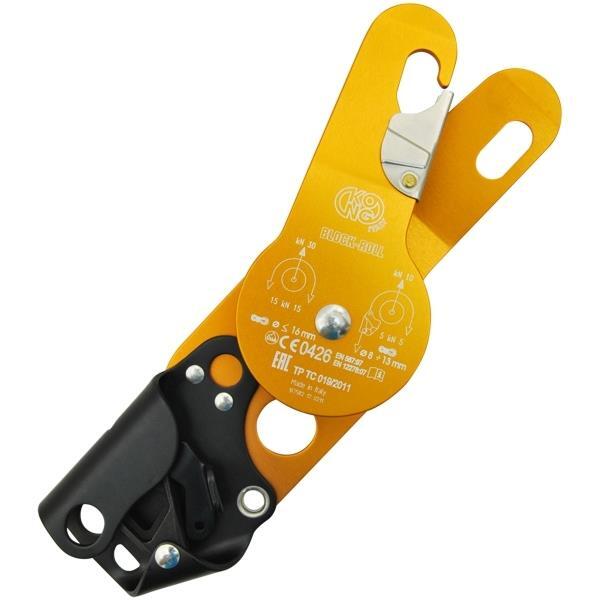 |
|
|
|
|
|
I’ve used a static line on every wall I’ve done since 2010. |
|
|
Skot Richardswrote: Thank you Skot and Kevin, those were exactly the type of personal testimonies I was hoping to find on here. I was surprised when checking out the Omni Bloc specs to see how much the weight shot up from the 1.1” to 1.5” model. It would be nice if the 2:1 kit is light enough to reasonably be carried by the leader (if not using a tag line). |
|
|
abandon moderation wrote: It's not a side topic, it's fundamental: The 2:1 doesn't work [well] when hauling using dynamic rope. You really need to use static rope. I use Highline Rope made in Canada. Lots of my friends have bought Andy's ropes. Your mighty Yanqui dollars will go a long way up here in the Great White North, eh? Email Andy directly, call him "Danger", and mention my name. mail@highlineropes.com |
|
|
Peter Zabrokwrote: Disagree. Unless you're hauling light bags, the weight of the bags will take out the 6-8% of static elasticity of the dynamic line within the first few cycles of the hauling. Then the dynamic rope works similarly to a static line in terms of stretch. When climbing with a partner, we'll use a dynamic line for the haul as a backup in case the lead line gets a core shit. When soloing I'll use a static line for the haul as getting a core shot in your lead line doesn't prevent you from continuing to lead on it after you isolate the core shot with a knot. |
|
|
Fail Fallingwrote: ^^ I could not disagree more. If you are hauling stuff up a big wall using a dynamic rope, you are manufacturing work for yourself. And I've hauled a fair bit of stuff.... ;) |
|
|
Peter Zabrokwrote: Sorry Pete, the 2:1 works great on dynamic ropes once the stretch has been hauled out of it. This is not bigwall theory, this is big wall fact. |


