
 Continue with onX Maps
 Sign in with Facebook






Edelweiss Rope is NOT the stated diameter


|
|
Edelweiss Toplight II from extremegear.org is not 10.2, it’s like 9.6 tops. I’ll post my caliper reading and a side by side with the Mammut crag classic 9.8. it’s also stiff as hell and doesn’t stretch. It feels like a static line. Would you whip? 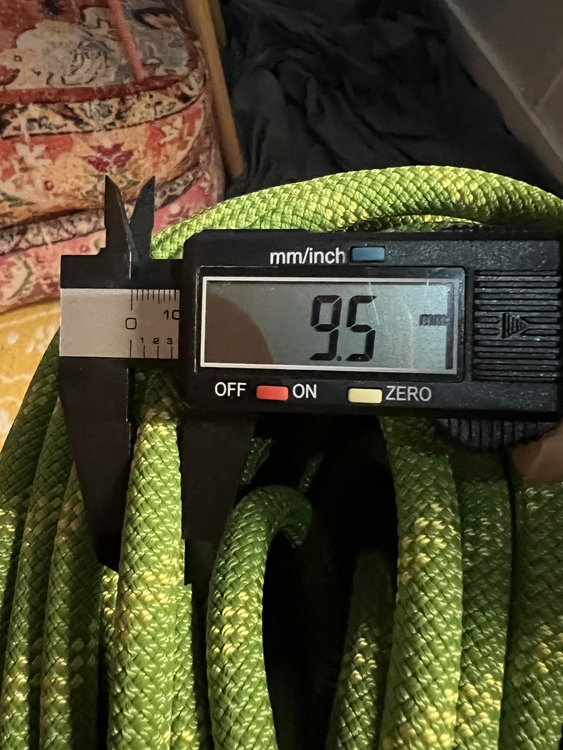 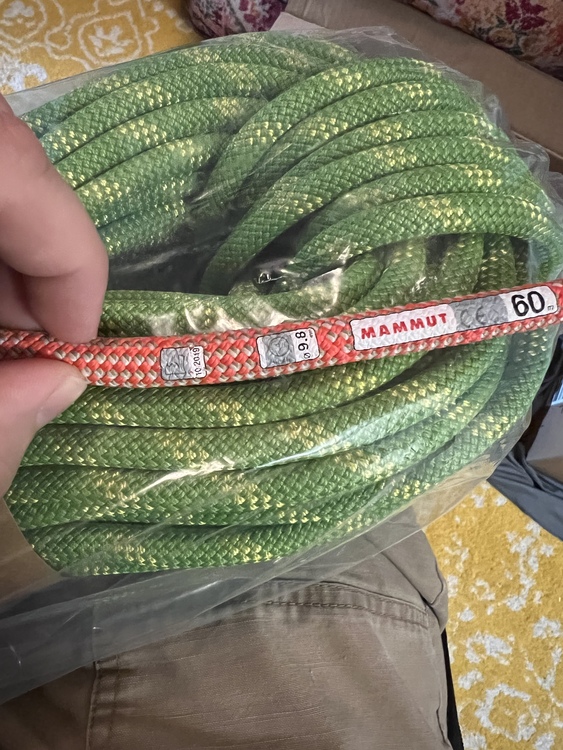 |
|
|
Few points nobody cares you shouldn't care g/m is what actually matters you're doing it wrong https://www.premiumropes.com/blog/what-is-the-diameter-of-my-rope Edit: Didn't even read about the handling Ropes all handle differently, softer ropes are from a different braid pattern, softer handle means less abrasion resistant. If it's a dynamic rope, it will stretch in a fall not in the hand. |
|
|
that guy named seb wrote: Interesting if not slightly combative. It still doesn’t address the fact that it’s supposed to be dynamic but the thing is like a caving rope. Good intel on how to measure though, I will re-measure. |
|
|
It would be more interesting if you found a rope that did measure to its claimed diameter. About the only thing you can be sure of with rope diameters is that a rope labeled with a smaller diameter is likely to be be thinner than a rope labeled with a larger diameter. But often not. |
|
|
I have found cheaper “workhorse” ropes to be a little stiffer and not as easy to handle. I’m sure it’s not a static line, what does it say in the end of the rope? It usually will have length, size and dynamic or static indicated on the ends of the rope. Also ropes will usually get a better in hand feel with use. Rap on it a few times. |
|
|
Does the claimed weight match the advertised g/m? Mine are heavier. |


|
Bryan K wrote: When you say it doesn’t stretch, what exactly do you mean and how did you determine that? Suppleness of the sheath isn’t always a great indicator of stretch. If you have an area that it is easy to either setup a top rope or fixed line you should determine how much rope is in the system. Then weight the rope with your body weight and determine how much it actually stretches. A static rope will probably stretch about 1 to 3 ft per 100ft if you get on it with ascenders. A dynamic rope should be stretching a fair bit more than that. Stretch per 100ft is probably closer to 6 to 10 feet in a static body load situation. |
|
|
Same problem here. My wife said it was 9.5, but I swear it's 10.2 if you measure it right. Plus there's elongation that can affect the size. It's the endurance that matters anyways. |
|
|
Christopher Chu wrote: That's why you always measure from underneath, never along the top. |
|
|
that guy named seb wrote:you're doing it wrong https://www.premiumropes.com/blog/what-is-the-diameter-of-my-rope They got pi wrong. |
|
|
Bob Harrington wrote: Lol good catch. |
|
|
It looks like you did not zero your caliper. If you look at the marks on the bar rather than the led display the rope is 10+ mm Did you measure your other rope? There measurement is supposed to be taken with the rope holding a specific weight, I forget what the weight is. There is also a margin of error that is something like 0.2mm. The rope has a specification for both dynamic and static elongation as a percentage. You could measure a length of rope, hang the rope and weight the rope, measure how far it stretches a, calculate the percentage and see if it matches. This assumes you're weight the standard weight for testing a rope (80 Kg) |
|
|
Here is how the standard says to perform the measurement. The relevant paragraph happened to be in a preview of the document which too expensive for me to purchase. You can rent access for a day at https://standards.iteh.ai/catalog/standards/cen/7a26ee54-e6da-40ca-92fb-e826045b5174/en-892-2012 or buy it at https://webstore.ansi.org/Standards/BSI/BSEN8922004 for $269.00 !!! :( EN 892:2012 (E) 5.2 Conditioning and test conditions Dry the test samples for at least 24 h in an atmosphere of (50 ± 5) °C and less than 20 % relative humidity. Then condition these test samples in an atmosphere of (23 ± 2) °C and (50 ± 2) % relative humidity for at least 72 h. Then start testing these samples at a temperature of (23 ± 5) °C within 10 min. 5.3 Construction, diameter, and mass per unit length 5.3.1 Procedure Clamp the test sample at one end. Load the test sample without shock with a mass of: (10 ± 0,1) kg for single ropes, (6 ± 0,1) kg for half ropes, (5 ± 0,1) kg for twin ropes at a distance of at least 1 200 mm from the clamp. After applying the load for 60 s mark within the next 10 s a reference length of (1 000 ± 1) mm on the test sample. The distance of the marking from the clamp or attachment for the test sample shall be at least 50 mm. Within a further 3 min measure the diameter in two directions around the diameter starting at points 90° apart at each of three levels approximately 100 mm apart. If the rope cross section is not circular, the maximum and minimum diameter are to be determined in each section. The length of the contact areas of the measuring instrument shall be (50 ± 1) mm. The rope cross-sectional area shall not be subject to any compression during the measurement. |
|
|
Bob Harrington wrote: What a weird typo! Here is what the article says -
First 5 digits of pi are - 3.14159, I suppose they typed "2" instead of "1". Here is why it doesn't matter: Let's do the wrap measurement, and, for the sake of accuracy, do 10 wraps around 10mm rope, and ignore the fact that the length of measurement is going to be affected by both the skew and thickness of measuring twine Correct pi value, 3.14159 will give as 314.159mm That is a difference of 0.1mm using tape measure - not going to happen :) But, let's assume, for the argument's sake, that we used the wrong pi value to calculate diameter of rope Correct 10 wrap length is 10*3.14159*10 Diameter of rope is then, Length/(N wraps)/Pi Correct - 314.159/10/3.14159 is, of course, 10mm The difference is ~3 microns. P.S. Clearly someone has too much time on their hands |
|
|
Here is a video on Tested that Adam shows an industry tool for measuring the thickness of soft materials. It is a tool that I never knew existed. |
|
|
Not sure/don't care about the diameter part, but I have heard from many people that Edelweiss ropes all handle terribly. Many describing them as like dealing with steel cable, it's why no matter how cheap I see them on sale for, I have never bought one. |
|
|
For textiles & rubber goods we use optical micrometers. |
|
|
Since the diameter of ropes changes with age and sheath loosening, it hardly matters what the exact diameter is unless it falls out of the range of what your belay device can handle. |
|
|
I have a new Edelrid Eco rope. New this year, the ropes shrink in disappointment every time first world leaders promise to do something about the environment but then do nothing. In a few years I will use it as a keeper string for my microtraxion to prevent it from falling into the boiling hot water at the base of the Squamish Chief |
|
|
when it comes to rope, length is probably more important than girth. |
|
|
Christopher Chu wrote: Also, dynamic properties > static properties. |


