Per the Friends of Indian Creek (FOIC)
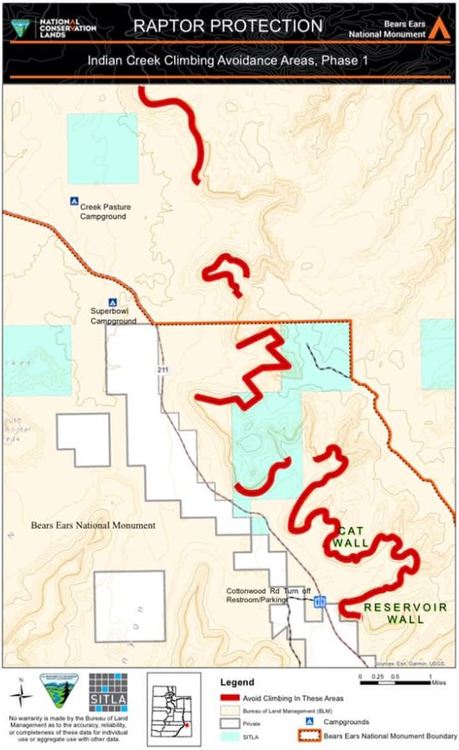
Hi, Friends,The Monticello FO has posted the raptor avoidance areas for 2021. Please note the avoidance areas have been expanded from those of previous years. The Monticello FO is actively monitoring nest sites and if the sites do not show signs of success, they may be re-opened prior-to the end date. However, we need your help now in order to keep these seasonal restrictions voluntary (and seasonal!). And the nesting raptors need our help! Please avoid these areas and encourage others to do so, signs or no signs. From the field office: MONTICELLO, Utah – Each spring raptors return to the Indian Creek area for nesting. Eagles, falcons, and other migratory birds use shallow depressions on ledges, cliffs and rock walls, and often return to the same site year after year to raise their young. The Bureau of Land Management (BLM) requests that climbers and hikers avoid nest areas during critical nesting periods, typically in early March through late August. Avoiding climbing and hiking in the vicinity of the nests and keeping a safe viewing distance will help ensure survival of young birds.Beginning March 1, the BLM asks the public to avoid climbing or hiking in areas with high potential or historically known to have bird nesting activity. The impacted areas are referred to in many climbing guidebooks as:
The Wall, Far Side, The Meat Walls, Cliffs of Insanity, Public Service Wall, Disappointment Cliffs, Fin Wall, Broken Tooth, Cat Wall, Slug Wall, and Reservoir Wall. This list serves only as a guide and does not indicate every avoidance area or their many names. Refer to the attached Raptor Protection Map to best identify avoidance areas. The BLM is coordinating raptor protection efforts with the Utah School and Institutional Trust Lands Administration (SITLA), the administrator of the climbing areas known as Disappointment Cliffs and portions of the Second Meat Wall climbing area.In March, BLM biologists will begin annual raptor activity surveys to verify which nest sites are active. Typically, by late April or early May, biologists can identify which nest sites raptors have selected. At that time climbing and hiking areas without active nests will be cleared for recreational use. The BLM requests that climbers and hikers completely avoid areas with active nests until the young birds have fledged, usually by late summer. Biologists will monitor nesting activity throughout the season and keep the recreation community informed of potential changes. Avoidance area notices will be posted throughout the Indian Creek Corridor during the recreation season.
![]()
https://www.blm.gov/press-release/blm-announces-avoidance-areas-protect-raptors-indian-creek-0

 Continue with onX Maps
 Sign in with Facebook