Continue with onX Maps
 Sign in with Facebook






Share Your Improbable Aid Placement Photos


|
|
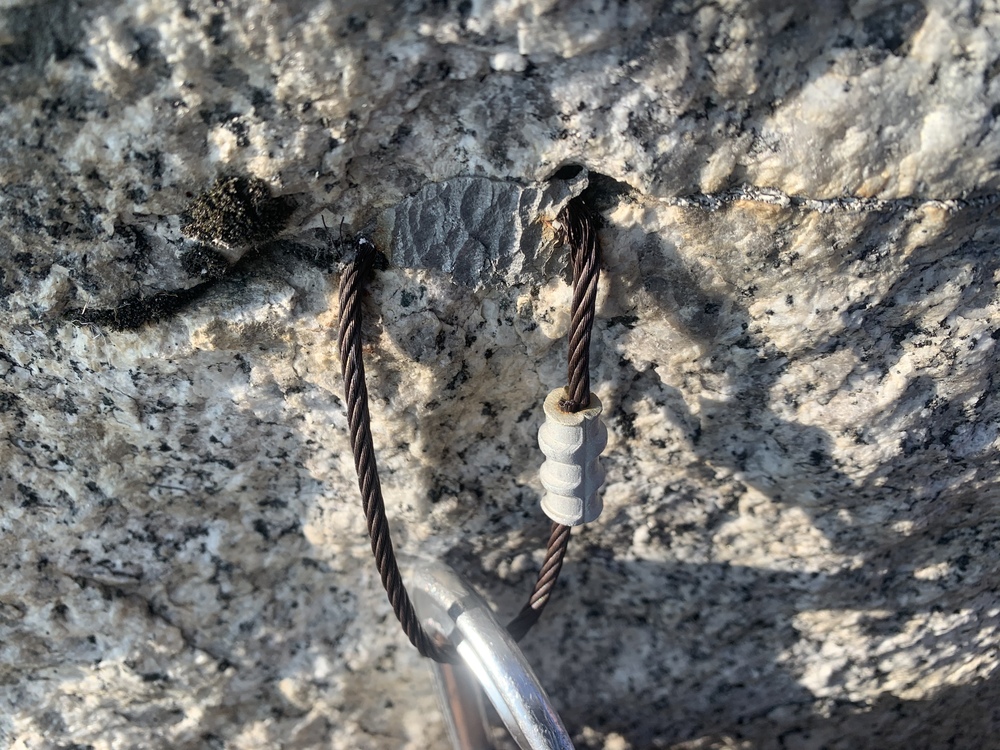
Skot Richards wrote: That frayed, rusty cable looks BOMBER. |
|
|
Kevin DeWeese wrote: Anyone tried Mule Tape? 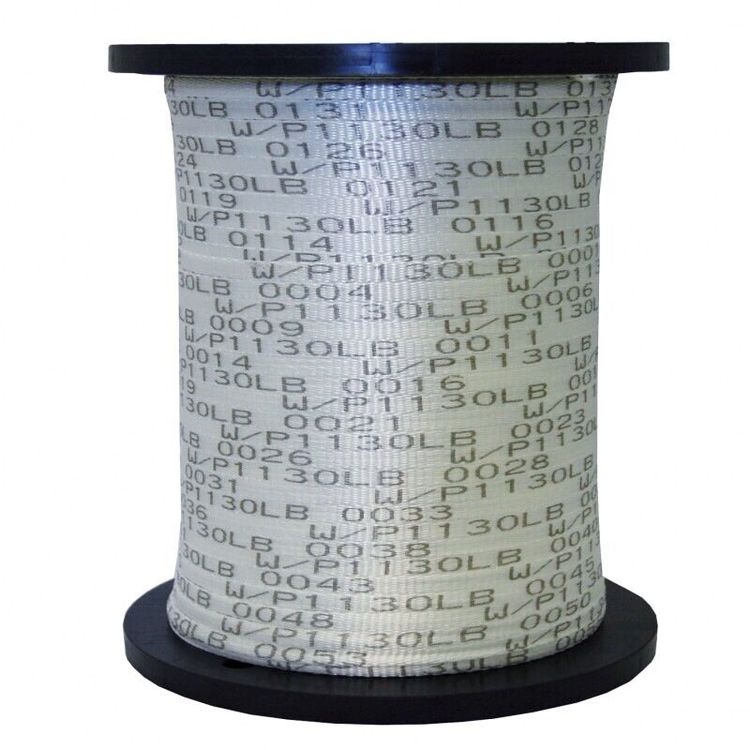 |
|
|
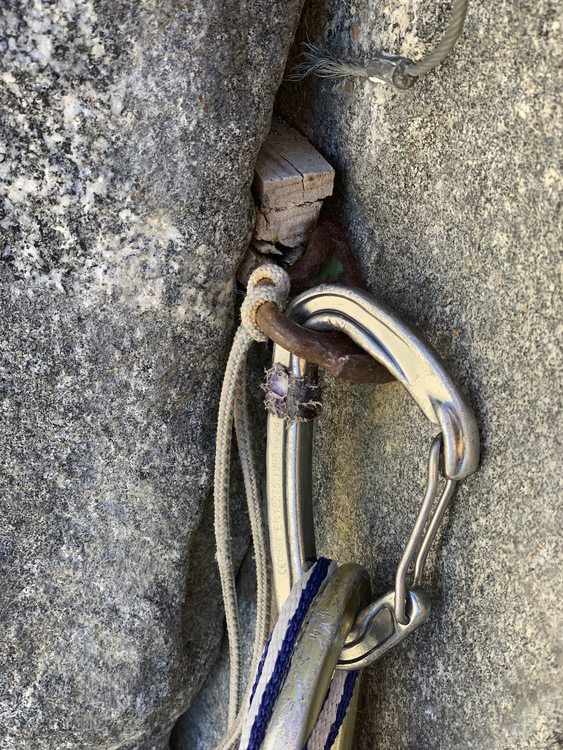
Kevin DeWeese wrote: Ah! You have the advantage of me; I didn't realise that 1/4" had become a standard size. I'm guessing that this is perhaps a more recent adoption. I always used the ubiquitous lightweight 1/2" tubular for tie-offs [albeit initially the solid 3/8" that Troll marketed in the UK] and occasionally the thicker 9/16" tubular if a pin appeared to be particularly good; on my various visits to The Valley and elsewhere - late 1970s plus a few times since - this certainly seemed to be the general standard, and I don't recall ever seeing anything less than 1/2" for sale in US climbing shops. Indeed, a few contemporary catalogues - Forrest 1974, Mountain Tools 1988, A5 1989 - include nothing below 1/2", the latter two specifically citing 1/2" and 9/16" for tie-offs; Black Diamond 1999 specifies 1/2" for tie-offs, while Yates 2005 offers 11mm Dyneema - but their sewn 'aid tie-offs' consist of 1/2" tubular. You mention pitoncraft instruction sources. Again, those to hand on my bookshelf don't mention webbing as narrow as 1/4" - although they're variously now a bit/quite/very dated! Robbins - Basic and Advanced Rockcraft 1971/3 - lists 1/2", 9/16" and 5/8" under 'smaller sizes'; Long/Middendorf - Big Walls 1994 - recommend 27" to 30" lengths of 1/2" or 9/16" for tie-offs; I decided not to plough through the whole 600-odd pages of Chongo's 1999 tome - but on page 394 [under NYLON: Loops] he lists short and long tie-offs of both 1/2" and 9/16" [40 or more of each]! The only source for this sort of lightweight tubular 1/4" webbing that I ever found - which wasn't sold into the climbing equipment industry - was a UK webbing manufacturer which, while obviously supplying companies like Troll and, I think, Wild Country, also made a whole range of sizes and specifications for other industries, sports and, no doubt, the military. I'm obviously familiar with modern sewn webbing slings made out of Spectra/Dyneema [I can never remember which is which], currently available in widths down to - I think - 8mm. Are the shorter lengths of these now becoming the standard for pin tie-offs? And can the webbing be bought off the reel for slinging hooks, cam hooks, non-swaged rurps etc? [Actually, the various such bits of tied webbing in the images on this thread all look to me like 1/2" nylon.] I know that some manufacturers supply hooks with integral sewn slings; I have one from Petzl which uses thin Dyneema. Apologies; didn't intend to go on as long as this! |
|
|
Ryan7crew wrote: 60’ of nothing but natural circle head placements on the horizon installed for instant equalization. Established 1985  |


|
Where is that? |
|
|
Bobby H wrote: Dark Side of Looking Glass Rock North Cakalacky |
|
|
Dylan Valvo wrote: Did you bounce test ‘em or did you think light thoughts? |
|
|
You aid folks are some sick puppies! LOL |
|
|
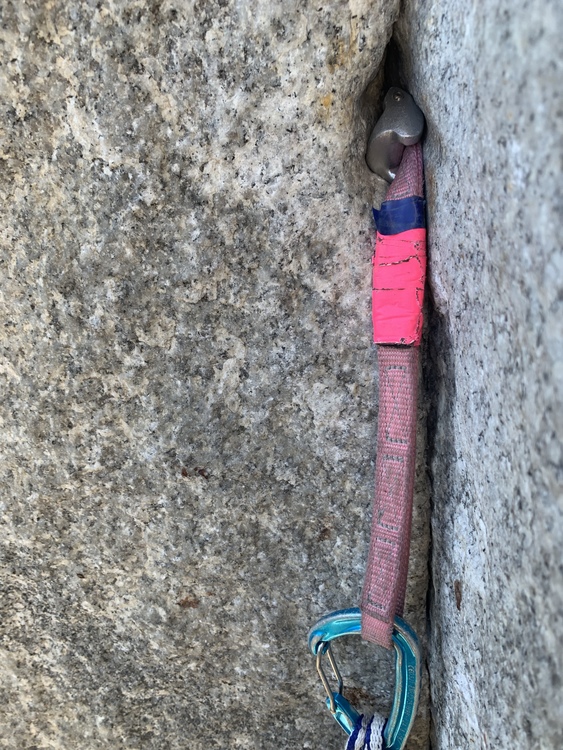
csproul wrote: You kinda get in a sick rhythm of try to rip it out of the wall with your arm, give it one good kick, stand on it, and repeat. It really epitomizes the thought of “it’s all A1 until it’s A4” |
|
|
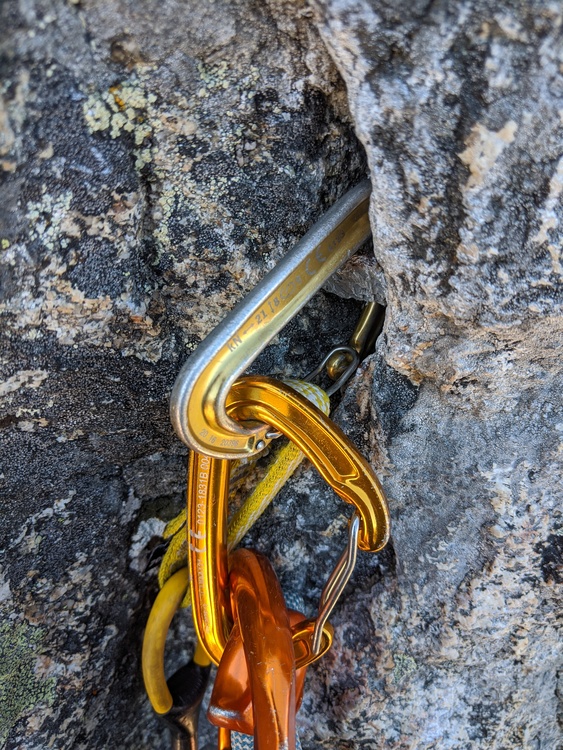 The only thing I could figure out to get by this blown out head on Liberty Crack in WA this summer was clipping around it with a cross loaded nano 22. Would not slot in the other way. Had little more than a free rack with me as most of the route goes free at a moderate grade! |
|
|
Christine Spang wrote: Was probably the best placement since it kept you higher than other option. Other options with a free rack: think of your nuts as wire hangers as well, pull the nut down to expose the loop, thread the wire behind the dead head (or whatever) then girth hitch the nut wire to itself (or two nuts together if you need more length), clip the nut and motor on. |
|
|
Yeah, I couldn't get a nut wire to thread for whatever reason. Good tip tho! |
|
|
Christine Spang wrote: Winner winner; fuck this I'm going to go eat dinner. |
|
|
Christine Spang wrote: Try using your nut tool to fish the loop out from behind the deadhead once it's passed behind it. |
|
|
Kevin DeWeese wrote: Couldn't you just hook that head? |
|
|
Buck Rio wrote: Don't normally have hooks on a free rack |
|
|
|
|
|
Ericsplosion II wrote: No i think you’re just tripping. |
|
|
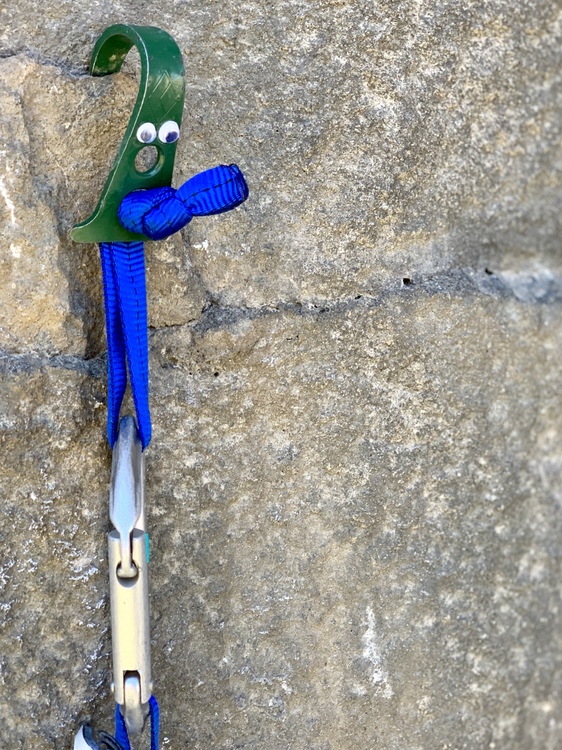
I guess Im trippin too! The carabiner face (hanging on Gumby hook) reminds me of Zima Blue. |
|
|
Christine Spang wrote: I brought a single hook (for the supposed aid crux later in that pitch) and hooked that sucker, after another marginal placement. I'm not much of an aid climber, but for a brief moment in time I could have used "aid" and "fun" in the same sentence ;) Next time I'll probably try threading a wire. That nano-hook is badass! |