|
|
Michael S
·
Oct 24, 2019
·
Somewhere, USA
· Joined May 2019
· Points: 30
My $0.02 as a new climber (Under 1 yr exp.) For what it's worth.
Keep in mind I lack basic climber fitness so I am growing more overall than training for Trad specific but what has pushed my grades up the most for trad has been lock off endurance oriented.
A mix of overhanging hard sport routes
Leading impossible gym grades (because you find yourself hunting better rest positions)
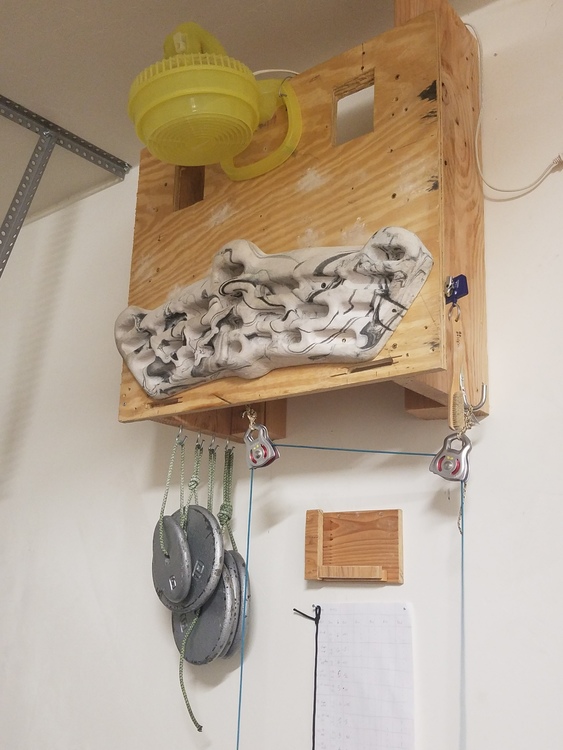
and a home built adjustable miniature crack machine
...Also since I've recently incorporated Bouldering (Hate it!!) into my training, I've noticed much better power suddenly which as Pnelson said keeps you from having to endure as much.
Also I'm a gear whore, so I sit at home practicing anchors, knots, equalizing gear with different gear placement scenarios. Also finding a more efficient way to rack and place gear because If you can't place gear what good is the climb training going to do?
|
|
|
Jason Giblin
·
Oct 24, 2019
·
Denver, CO
· Joined Aug 2016
· Points: 75
|
|
|
Eugenel Espiritu
·
Oct 24, 2019
·
Pennsylvania
· Joined May 2015
· Points: 1,640
|
|
|
Greg Davis
·
Oct 24, 2019
·
Unknown Hometown
· Joined Aug 2008
· Points: 10
regular climbing should be fine, training in a gym if you have to. Being a strong climber makes you a stronger trad climber. If you need practice placing widgets or doing hand jams, that is a whole 'nother deal.
The whole discussion of trad climbers being weak or boulderers being scared is so stupid, something middle schoolers might snicker at. It's like being excited that power lifters are stronger than road cyclists - of course people who train for climbs only a few moves long are going to be stronger and more powerful than those doing long routes. Just different things, which you should do depends on why you are deciding to climb that rock in the first place and you'll develop the requisite skills.
"Find a mentor" could be "hire a guide" unless you can find someone to teach you for free... at least kick in gas money and buy 'em lunch.
|
|
|
Ryan Henderson
·
Oct 24, 2019
·
Denver, CO
· Joined Apr 2010
· Points: 145
"The Rock Climber's Training Manual" has an appendix in the end that modifies their program (more so geared towards sport) to be more trad friendly. I was stoked to see this cause I thought I was gonna have to modify it myself. It kind of says everything you guys have mentioned above (Bouldering and hangboarding and general fitness). It does say get out more and climb more than our fellow sport climbers though. It also says campus boards are useless, but Hangboards are pretty beneficial. We will see though! As I just started it roughly 2 months ago :)
|
|
|
John Clark
·
Oct 24, 2019
·
BLC
· Joined Mar 2016
· Points: 1,408
I climb 5.11-5.12- on sierra granite and 5.12 in the creek. Most of my gym sessions are 2 hours of bouldering, with an hour lunch core and hangboard sesh 1-2 times a week. With this output (there's a legend for point values), I am cruising the rostrum in about 3 hours clean and have a few harder single pitch onsights under my belt. Pretty much 0 crack or rope climbing on weekdays.
https://docs.google.com/spreadsheets/d/1kb-q072nv8L958DMynsSHVw8P5k8no_PEPzJ4VaWZqY/edit?usp=sharing (link is my training log)
I don't follow a specific training program, I just climb a lot and get outside as much as possible on weekends. What the pros say is true, just climb more. Let me know if you want more info.
Gym grades (max):
Bouldering: V9
Sport: 5.13a
Outdoor Grades (max):
Granite Trad: 5.12a
Granite Sport: 5.12b
Bouldering: V7
Sandstone Trad: 5.12b/c
Sandstone Sport: 5.12-
Tuff Sport: 5.12-
Limestone Sport: 5.12-
|
|
|
Pavel Burov
·
Oct 24, 2019
·
Russia
· Joined May 2013
· Points: 50
+1 for indoors bouldering.
+ my $0.03:
$0.01. Focus on less than vertical to slightly overhanging problems. Those slippery with lot of high stepping, awkward footwork and balancy ones.
$0.02. Strive to repeat any hard problem as many times as needed to polish 'em so it feels like walking in a park. Focus on those problems were especially awkward to solve. You need to develop like perfect feel of balance and ability to position your body and limbs using any given set of holds (even the most slippery and shitty ones) so you can, e.g., peace your mind, take some deep breathes, chalk up and think about your further options.
|
|
|
Pavel Burov
·
Oct 24, 2019
·
Russia
· Joined May 2013
· Points: 50
+ yet another $0.01. Do not waste too much time for indoors lead routes. Just do it like once per week or even twice per month. Just to refresh that feeling "everything went so smooth just before my hand/foot slept off of that [censored] hold and I got a pretty fun ride" or "I almost clipped that draw when something went wrong. That was a good ride!"
I would elaborate this a bit. Indoors climbing gyms are fantastically good to develop "climbing fitness" and to coordinate your body and limbs. And indoors bouldering wall is the right place to focus on developing those skills (well, there is even better tool known as system board. Although system boarding is a bit on the boring side). Indoors leading wall is the right place to learn how to clip, how to get in the zone, etc. Although when one gets on some real rock it feels very different. Indoors leading walls are almost always overhang so falling off of them seems to be yet another fun ride. Outdoors trad routes (especially sub 5.11+) is way different stuff, one does really want to never fall there. Indoors foot chips even the tiniest ones are like perfect. Outdoors one should really trust theirs feet and courageously step on like envisioned foot holds. Thus those indoors leading skills are not that transferable to outdoors. Focus on efficiency. Those transferable to outdoors skills one could develop indoors are climbing moves coordination, and feel of balance, and feel of forces and torques, and "climbing fitness". This very skill set is better to develop in a bouldering area. Just do not focus solely on bouldering. Lead and top rope time to time.
|
|
|
Gosh Glance
·
Oct 24, 2019
·
Seattle, WA
· Joined Jun 2019
· Points: 5,498
Sam Skovgaard wrote: I have an adjustable crack machine in my garage. I do two types of training on it:
1) long runs of up/down laps on easy sizes, mixing up sequences (shuffling hands vs windmilling big hand-over-hand strides)
2) Setting it to the hardest widths (finger/thumb stacks, thin hands, wide hands) to work on the specific techniques
As a result of this type of training, I'm pretty good at down climbing cracks Can i see a picture of your setup? Sounds really rad!
|
|
|
Fran M
·
Oct 24, 2019
·
Germany
· Joined Feb 2019
· Points: 0
Pavel Burov wrote: +1 for indoors bouldering.
+ my $0.03:
$0.01. Focus on less than vertical to slightly overhanging problems. Those slippery with lot of high stepping, awkward footwork and balancy ones.
$0.02. Strive to repeat any hard problem as many times as needed to polish 'em so it feels like walking in a park. Focus on those problems were especially awkward to solve. You need to develop like perfect feel of balance and ability to position your body and limbs using any given set of holds (even the most slippery and shitty ones) so you can, e.g., peace your mind, take some deep breathes, chalk up and think about your further options. I'm inspired, thanks!
|
|
|
Bttrrt Rock
·
Oct 24, 2019
·
Helena, MT
· Joined Jul 2014
· Points: 60
Pavel Burov wrote: +1 for indoors bouldering.
+ my $0.03:
$0.01. Focus on less than vertical to slightly overhanging problems. Those slippery with lot of high stepping, awkward footwork and balancy ones.
$0.02. Strive to repeat any hard problem as many times as needed to polish 'em so it feels like walking in a park. Focus on those problems were especially awkward to solve. You need to develop like perfect feel of balance and ability to position your body and limbs using any given set of holds (even the most slippery and shitty ones) so you can, e.g., peace your mind, take some deep breathes, chalk up and think about your further options. This except better if outdoor boulders and no spotter. Learn to asses risk involved with falling while making committing moves. While this may not improve grades quite as fast as some other methods but it will make you a safer climber. Or broken.
|
|
|
Deven Lewis
·
Oct 25, 2019
·
Idaho falls
· Joined Oct 2016
· Points: 295
You could take up jujitsu or wrestling I heard it really helps with offwidth climbing.
I think your training mirrors what I do in the winter. I've found it's never really my fitness that holds me back it's my fear and my technique. I climb with people better than me and watch their foot work. And top roped the shit out of the climb they did. it really helped me climb corners and finger and thin hand cracks much more efficiently.
taking falls in the gym and outside (double backing a piece and let Jesus take the wheel)
are what I think helped me the most.
|
|
|
C Limenski
·
Oct 25, 2019
·
Unknown Hometown
· Joined Mar 2016
· Points: 15
Don't let Jesus take the wheel. That guy gets a free pass if he decks!
Do learn and practice placing good gear (aid up your local .11 splitter!)
Know what to trust, learn what is bunk.
Offwidth is hard, but so is hand jamming at first. Footwork technique and mad aerobic fitness will see you send big wide big chillin.
Edit: I'm confident you can never do enough bicycle crunches
|
|
|
Deven Lewis
·
Oct 25, 2019
·
Idaho falls
· Joined Oct 2016
· Points: 295
C. limbnski wrote: Don't let Jesus take the wheel. That guy gets a free pass if he decks!
Hahah very true! I meant when you get scared place two really good pieces and go for it. Two well placed .5 cams in granite have a combined holding force of 24kn and a fall no more than 2 meters will result in less than 4 kn (for someone 150lbs) pretty close to a 10 to 1 safety ratio. If those pieces and the subsequential pieces after that fail shit it's just your time to go.
|
|
|
Sam Skovgaard
·
Oct 27, 2019
·
Port Angeles, WA
· Joined Oct 2017
· Points: 208
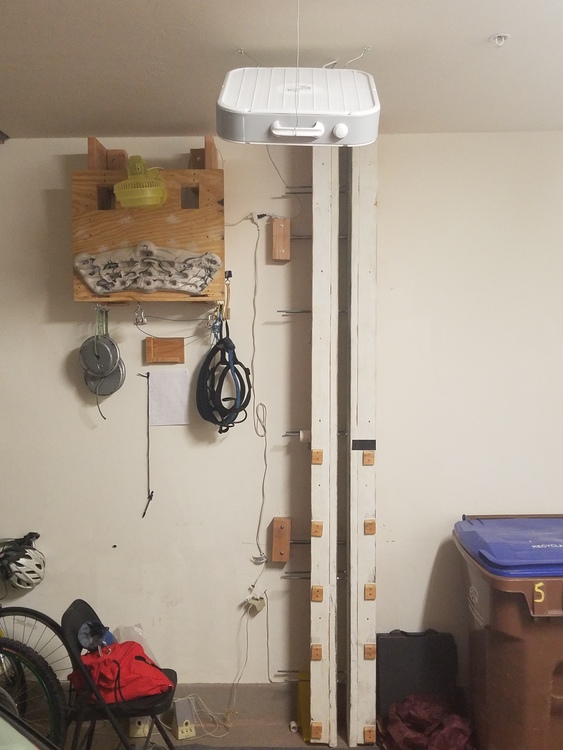
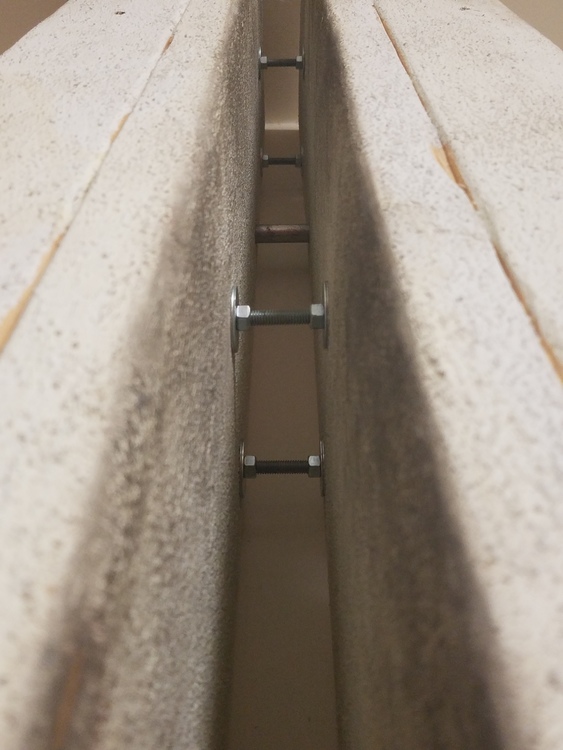
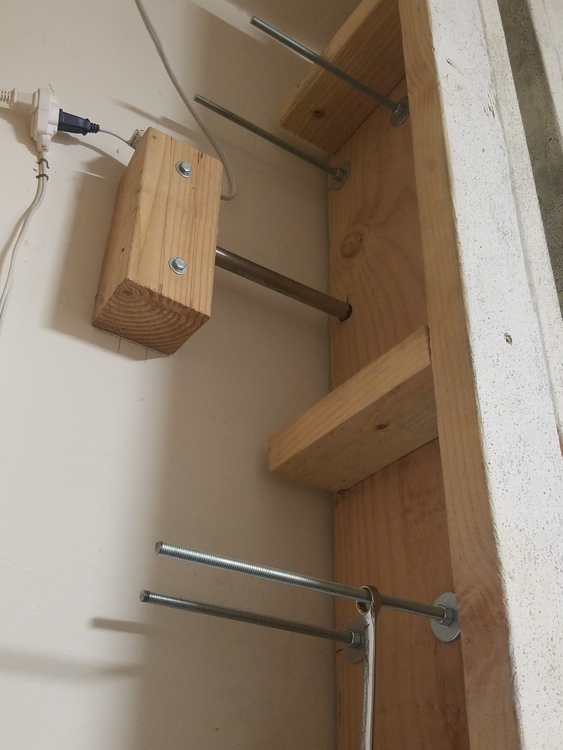
Josh Glantz wrote: Can i see a picture of your setup? Sounds really rad! The smooth steel rails are attached to the wall studs with the end blocks using lag screws. The crack wall slides on the smooth rails (one side is fixed). The 2x4 braces make the whole thing more rigid. The little footholds are for finger sizes where it's too small to foot jam. It's hot in my Tucson garage, so the fans are a must.
Also, since it is technically part of trad climbing training too, here's my hangboard setup:
|
|
|
James Dan
·
Nov 18, 2019
·
Crestone
· Joined Nov 2019
· Points: 0
Traditional rock climbing is the coolest thing I have been doing for many years. At first he was engaged in a lot of training climbing, and after he began to engage in fully traditional climbing. Training for this is best done through mid intensity climbing with a very moderate pump for 7 minutes then a 3 minute rest. And honestly, it's worth it.
|

 Continue with onX Maps
 Sign in with Facebook