|
|
Andrew Rice
·
Jan 31, 2019
·
Los Angeles, CA
· Joined Jan 2016
· Points: 11
Another thing to know about is that via AAC or USA Climbing membership you can generally get accepted into Expert Voice (formerly Experticity) and get pro-deal level prices on a lot of great mountaineering gear and clothing. Naming brands and/or discounts violates the terms of service, so I won't but just know that it's worth the minor hassle.
I also have found extraordinary deals in thrift stores and used gear stores. Plus the for-sale forums here.
|
|
|
Exiled Michigander
·
Jan 31, 2019
·
Unknown Hometown
· Joined May 2018
· Points: 252
I'd recommend posting this on 14ers.com for a different perspective (more hikers than rock jocks).
You can do most of the avvy-savvy, non-technical winter 14ers (Quandary, Sherman, Elbert, Pikes, Yale, Torreys, La Plata) with less gear than you might think: ten essentials, base-layer, mid-layer, down or synthetic outer puffy, ski pants, warm hat, facemask or buff, gloves or mittens, an extra pair of gloves or mittens, a solid pair of boots, warm wool socks, extra wool socks, Kahtoola microspikes, and, MOST IMPORTANTLY, a basic ice axe (don't leave home without one when snow is on the peaks!). As long as you avoid cotton you'll likely be warmer than you think . . . in fact, oftentimes the problem is being too warm and sweating too much on the way up. A pair of knee-high gaiters would be next on my list, followed by snowshoes. You need snowshoes less often than you'd imagine--often the snow on the peaks is packed or windblown or there is a solid trench . . . but when you do need snowshoes, you REALLY need them (postholing in waistdeep snow sucks). In terms of boots, I've done all of the above peaks in my Salomon Quest summer hiking boots and haven't had a problem. As long as you don't wear cotton socks your feet will stay pretty warm even if they get wet. A cheap pair of ski goggles will definitely help as well if it is windy. Microspikes are a huge help, but between microspikes and an ice axe I'd get the ice axe first. Crampons are unnecessary until you work your way up to the couloir climbs, and even then you can rent them from REI for like $12 a day. Another cheap item worth getting is a solid thermos. A warm cup of tea or coffee out of the wind is a huge pick-me-up.
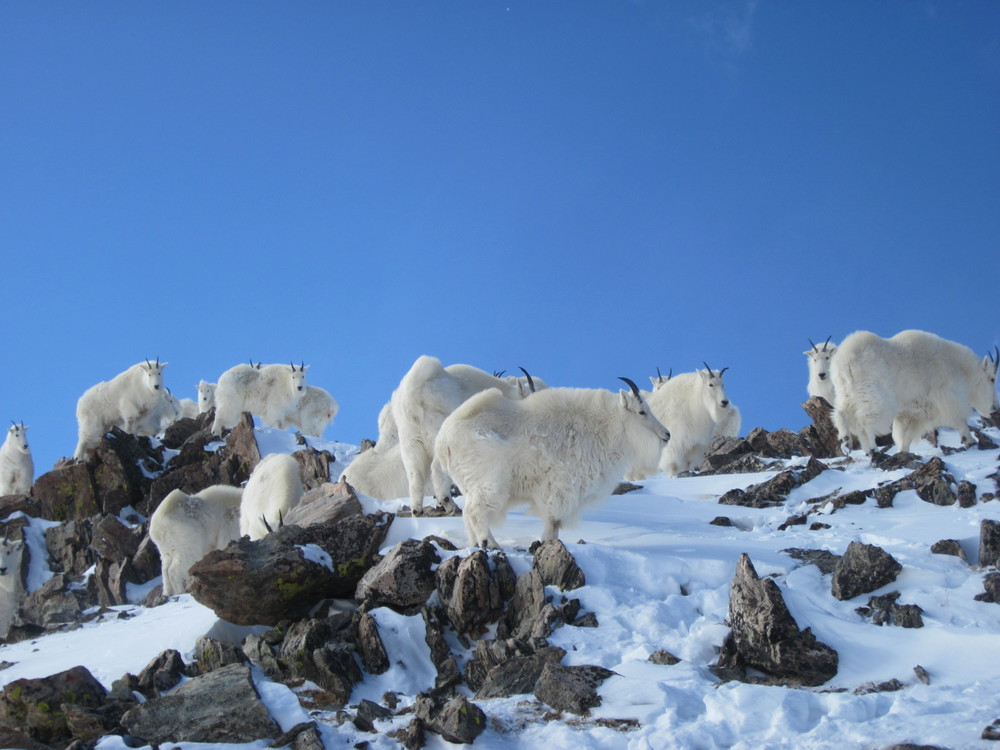
Know the route, respect the mountains and weather, don't be afraid to retreat if conditions change, and have fun. The solitude of the 14ers in winter is hard to beat . . . oftentimes mountain goats will be your only company! West Ridge of Torreys Peak:
![]()
|
|
|
Aaron G
·
Jan 31, 2019
·
Current: Ljubljana
· Joined Sep 2018
· Points: 76
|
|
|
Long Ranger
·
Jan 31, 2019
·
Boulder, CO
· Joined Jan 2014
· Points: 669
Sure that's perfectly fine - My website is listed in my MP profile, so there's no real anonymity implied.
|
|
|
Billcoe
·
Jan 31, 2019
·
Pacific Northwet
· Joined Mar 2006
· Points: 936
CU doesn't have an outdoor program where you can rent the things you need? Lots of schools do, in fact, I ran one for 2 years where I went. No one expected impoverished students to have to gear up just to try some new outdoor activity. (generally). Suggest checking to see if they have a student activities dept and see what they have. Good luck!
|
|
|
Detrick S
·
Jan 31, 2019
·
Denver, CO
· Joined Jul 2012
· Points: 152
Definitely feel your pain: Big dreams, little money.
When it comes to clothing, buy old gear from thrift stores. I know the Boulder thrift stores are rife with mountaineering gear. Puffies are great, but wool is timeless. Also, keep an eye out for a nice outdoor clothing company that starts with a P, paddagucci or something ;-) they'll replace anything you buy secondhand with no questions asked.
As for the order, I used borrowed strap on crampons on my stiff hiking boots and ice axes older than me for my first ice leads. I've always relied on friends for ice screws.
The order I've accumulated winter gear for CO mountaineering: wool clothing > nice gloves (new) > used mtneering boots > ancient ice axes > crampons. That gets me to most low-key alpine destinations (think Dreamweaver and other WI/AI3 routes, or harder toproping). My next purchases will be decent ice tools, ice screws, cross country ski setup (used), and then I'll figure out what I need next out in the hills. I wouldn't bother with snow shoes unless there's a route that you know you'll need them.
Have fun out there! The flatirons after a fresh snow can be a great place to practice self-arrest and other skills.
|
|
|
Rui Ferreira
·
Jan 31, 2019
·
Boulder, CO
· Joined Jul 2003
· Points: 903
Plenty of good advice already, but in terms of priorities having a good pair of boots is critical. Save your $100/month for that purchase and make sure they are warm, fit well and will allow you to do the mountaineering activities that you have envisioned (technical ice, snow climbs, whatever).
I have two pairs of snowshoes and I have not used them for over twenty years and don't really find a need for them in the Front Range and other places that I typically climb. For a long time I was a hold-out but have finally come around to the merits of technical ski bindings and ski boots that allow for technical climbing and make the approach and descent far more pleasant that walking in, etc. This is a major investment in gear, but used gear works fine on this front (just stick to the same advice on boots as above). There are frequent For Sale posts on MP for this stuff.
Clothing that is versatile and regulates temperature swings is important. Don't wear blue jeans to the backcountry or cotton in general, it might be fine for Eldo, but not for RMNP...
I have been climbing for over thirty years and have accumulated plenty of stuff over the years that you are welcome to have for free. Lots of items including climbing bibs, jackets, gloves, crampons, etc. contact me directly as I am in Boulder. You can even have my old Sherpa snowshoes and poles!
|
|
|
Matt Wells
·
Jan 31, 2019
·
Healdsburg, CA
· Joined Jul 2018
· Points: 0
Hey Connor, do you need an ice axe? I’m pretty new to mountaineering myself and bought an axe that’s too short for me. Newbie mistake... I don’t know what size you need/want but I have a never used 60cm Black Diamond that’s pretty nice. I’m out in California, but I’d cut you super deal and ship it to you if you’d like.
|
|
|
I F
·
Feb 1, 2019
·
Curled up under damp leaves…
· Joined Mar 2017
· Points: 4,386
Depending on your comfort level with used stuff, ebay can be a good option for things like snowshoes, poles, crampons etc.
|
|
|
Hamik Mukelyan
·
Feb 4, 2019
·
Palos Verdes, Los Angeles
· Joined Sep 2009
· Points: 310
Xam wrote: OP is masters student at CU. Oops. Skipped that part of the thread :-)
|
|
|
Tim Stich
·
Feb 4, 2019
·
Colorado Springs, Colorado
· Joined Jan 2001
· Points: 1,516
14ers.com is a good site to find safe winter routes up the tall peaks. Summitpost.org is also a great resource and covers almost every peak imaginable in CO.
|
|
|
other
·
Apr 30, 2019
·
San Diego, CA
· Joined Apr 2006
· Points: 15
Chris Little wrote: I've done a lot of mountaineering (Including 5th class climbing) in a t shirt, jeans, and cheap hiking boots. (You can get brand new, name brand, quality hiking boots for $20 at Big 5. Don't know if they have that chain where you live.) You can get by w/o a lot of gear deemed to be essential. Having said that, I have to admit I would often go out and buy the very best, above and beyond what I could afford. You have determine what your priorities are. Just a little friendly advice. Chris no offense but that is BS. Big 5 has no brand cheap stuff or name brand market expensive price stuff. $20 shoe boots are ok for short day hikes with a light pack. That’s it. Used is a much better value.
|

 Continue with onX Maps
 Sign in with Facebook